Leave Your Message
Why do Drive Belts wear out so quickly, even when a vehicle seems well maintained? Often, the belt itself is only part of the story. Incorrect tension, misaligned pulleys, worn bearings, heat, and contamination can all shorten its service life. A belt may squeal on a cold start, show shiny ribs, or develop tiny cracks along its edges. Those details are clues, not a diagnosis.
The U.S. Department of Energy’s Improving Motor and Drive System Performance: A Sourcebook for Industry identifies alignment, tension, and inspection as important parts of belt-drive maintenance. Gates’ belt-drive maintenance guidance also emphasizes checking the complete drive system, rather than replacing a belt and overlooking the cause of its wear. These sources support a practical point: a new belt can fail early if the pulleys or tensioning system remain out of condition.
For a reliable answer, the symptoms must be matched to the equipment and its maintenance history. A belt that is too tight can load bearings; one that is too loose may slip and heat up. Small faults matter. Because no source material was supplied for a named expert quotation, this introduction does not invent one. The article will examine common wear patterns, contributing conditions, and straightforward inspection steps, while separating visible evidence from assumptions. The aim is simple: help readers find the underlying problem before the next belt goes on.
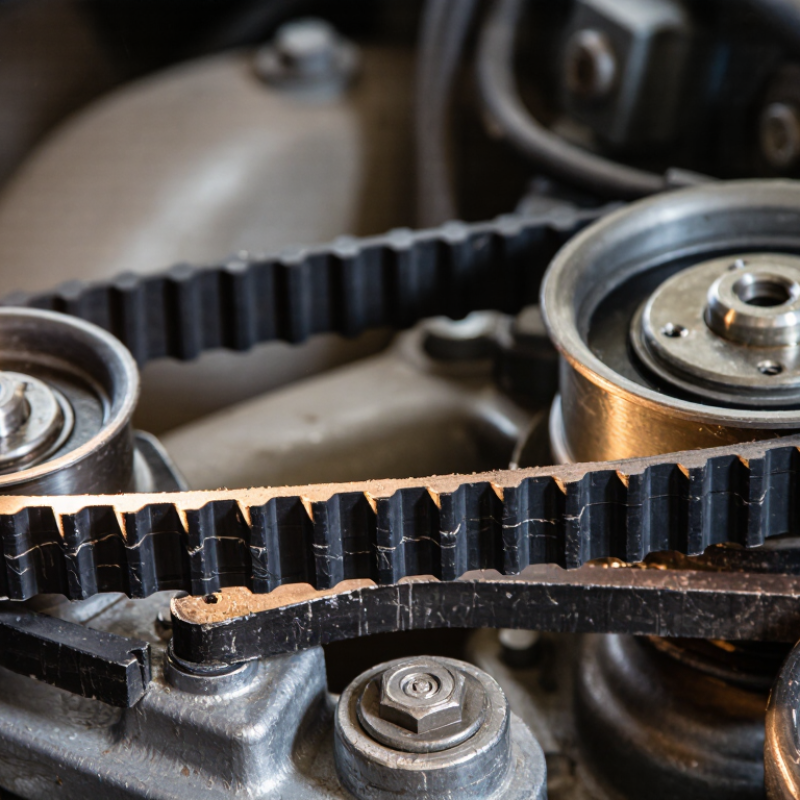
A drive belt carries power from the crankshaft pulley to other engine components. As the crankshaft turns, the belt moves around grooved pulleys, spinning accessories such as the alternator and air-conditioning compressor. Depending on the engine design, it may also drive the water pump or power-steering pump. The belt’s ribs grip each pulley to transfer motion without gears. Small parts matter. A tensioner keeps the belt snug, while idler pulleys guide its path and help maintain contact.
That constant movement creates friction and heat, especially in a crowded engine bay. Over time, rubber can harden, crack, or lose grip. A high-pitched squeal on startup may suggest slipping, but it does not prove the belt is the only problem. A weak tensioner, worn pulley bearing, or pulley misalignment can also cause noise and uneven wear. Oil or coolant on the belt can damage its surface, too. Look for frayed edges, missing ribs, or shiny patches during inspection, with the engine switched off. Belt wear is not always the belt’s fault. That detail is easy to miss. Replacing it without checking pulley alignment or tension may only postpone the same problem. Check the vehicle’s service guidance, since belt routing and inspection intervals vary by engine.
| Drive Belt Detail | How It Transfers Power | Common Wear or Failure Signs | Likely Causes | Useful Check or Action |
|---|---|---|---|---|
| Serpentine belt | A single ribbed belt follows a path around the crankshaft pulley and may drive accessories such as the alternator, air-conditioning compressor, power-steering pump, or water pump, depending on the vehicle. | Squealing, visible cracks, frayed edges, missing ribs, or a belt that repeatedly slips. | Age, heat, contamination, misalignment, a worn tensioner, or a pulley that does not rotate freely. | Inspect the belt and its path, and have the tensioner and pulleys checked if noise or uneven wear returns. |
| V-belt | The belt’s tapered sides grip matching grooves in pulleys to transfer rotation. Some engines use separate V-belts for different accessories. | Squealing under load, glazing, cracks, a polished belt surface, or visible wear in the belt’s sides. | Incorrect tension, worn or mismatched pulleys, contamination, or pulley misalignment. | Check belt tension and pulley condition according to the vehicle service procedure; replace a belt that is cracked or damaged. |
| Automatic belt tensioner | A spring-loaded tensioner maintains pressure on the belt as the engine runs and components wear. | Belt flutter, repeated squealing, excessive tensioner movement, or a belt that appears loose. | Weak spring, worn pivot or bearing, or a tensioner arm that binds. | Inspect tensioner movement and bearing condition. Replacing only the belt may not solve wear caused by a failing tensioner. |
| Pulley alignment and bearings | Aligned pulleys guide the belt along its intended route; their bearings allow accessories and idlers to rotate. | Wear concentrated on one edge, belt tracking off a pulley, grinding noises, or a pulley that wobbles. | Misalignment, a damaged pulley, or a worn accessory, idler, or tensioner bearing. | With the engine off, inspect for visible damage. A technician can check pulley alignment and bearing play safely. |
| Heat and engine-bay conditions | The belt flexes around pulleys while operating in a hot environment, gradually aging its rubber and reinforcing materials. | Hardening, surface cracks, glazing, or repeated failures after short periods of use. | High operating temperatures, nearby heat sources, or a component that is binding and generating excess friction. | Look for the underlying heat or friction source rather than treating repeated belt replacement as the only solution. |
| Oil, coolant, or other fluid contamination | Contamination can reduce belt grip and may degrade belt materials, depending on the fluid and belt construction. | Softening, swelling, sticky residue, slipping, or unusual belt noise. | A leak from an engine seal, hose, or accessory component. | Find and repair the leak, then assess the contaminated belt for replacement. Keep belt surfaces clean and dry. |
| Accessory resistance or seizure | The belt must turn each driven accessory; abnormal resistance increases the load on the belt and related components. | Sudden squealing, smoke, belt damage, or an accessory that stops operating. | A failing accessory bearing or a seized pulley, which can cause rapid belt wear or breakage. | Stop the engine if there is smoke or severe noise. Have the accessory and pulley system inspected before fitting another belt. |
| Inspection and replacement timing | Belt condition changes with vehicle design, mileage, climate, use, and exposure to contaminants. | Any cracking, fraying, missing material, persistent noise, or visible damage warrants attention. | Following a universal replacement interval instead of the vehicle’s maintenance guidance can lead to premature replacement or missed wear. | Follow the vehicle manufacturer’s inspection and replacement schedule. There is no single service interval that applies to every vehicle. |
Note: Accessory drive belts are different from timing belts. The belt routing and the accessories driven vary by engine, so consult the vehicle’s service information before inspection or repair.