Inquiry
Leave Your Message

What Are the Best Machinery Belts from China?

Choosing the best Machinery Belts from China requires more than comparing prices. Belt structure, rubber quality, tensile strength, and service support matter equally. A low quotation can become expensive when a belt slips, cracks, or fails beside a dusty conveyor.

Industry reports provide useful context. Grand View Research identifies rising automation, mining activity, and material handling investment as major conveyor-belt demand drivers. MarketsandMarkets also highlights efficiency, predictive maintenance, and safer production as important purchasing factors. These findings support a practical view: Chinese suppliers should be evaluated through measurable performance, not factory photographs.

Material matters.

Experienced buyers usually request technical data sheets, production samples, splice instructions, and test records. They should also check whether the manufacturer follows standards such as ISO 14890, ISO 340, or DIN specifications, where applicable. Yet standards alone do not guarantee a suitable belt. Temperature, pulley diameter, load impact, oil exposure, and operating speed can change the decision completely.

Conveyor specialist Dan Marshall has expressed the central maintenance lesson this way: “A conveyor belt is only as reliable as the system supporting it.” That statement deserves attention. A premium belt may still wear quickly if alignment, cleaners, or loading conditions are poor.

This guide compares Chinese Machinery Belts by application, construction, durability, customization, quality control, and after-sales capability. The comparison is not perfect. Supplier claims can be difficult to verify. Buyers should request independent test evidence and examine real operating references before committing to large orders.

What Are the Best Machinery Belts from China?

Types of Machinery Belts Manufactured in China

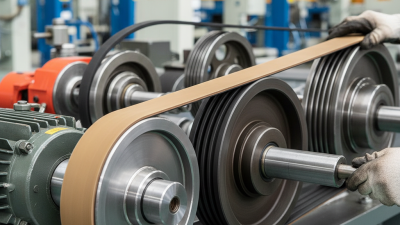
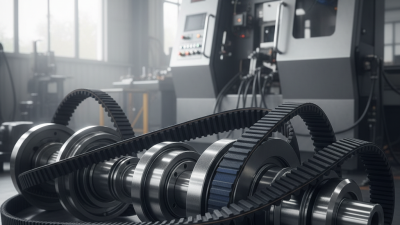
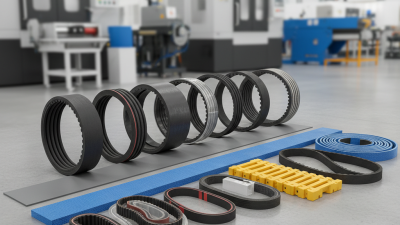
Machinery belts made in China include timing belts, V-belts, flat belts, conveyor belts, and round belts. Each type serves a different transmission need. Timing belts have molded teeth that synchronize shafts with limited slippage. They are common in packaging equipment, printing machines, and automated production lines. V-belts use a wedge-shaped profile. Their strong grip suits pumps, fans, compressors, and general factory drives.

Flat belts support smooth, high-speed power transfer across longer distances. Conveyor belts move cartons, bulk materials, and components through production areas. They may use rubber, PVC, polyurethane, or fabric-reinforced layers. Round polyurethane belts are flexible and easy to join. They often appear in light conveyors and roller systems. Material choice matters. Oil, heat, dust, moisture, and sharp edges can quickly change belt performance.

Reliable Chinese manufacturers usually provide drawings, hardness data, tensile information, and dimensional reports. Buyers should check tooth pitch, belt length, width, pulley compatibility, and operating temperature. A belt can look accurate but still fail under real load. That detail is easy to miss. I would also request sample testing before ordering large quantities. Factory audits, batch traceability, and inspection records improve purchasing confidence. However, specifications alone are not enough. Installation tension, pulley alignment, and storage conditions can shorten service life, even when the belt itself meets the required standard.
Key Materials and Construction Features of Chinese Machinery Belts

What Are the Best Machinery Belts from China?

Key Materials and Construction Features of Chinese Machinery Belts

Choosing a machinery belt begins with the working environment, not the catalog photograph. Rubber belts suit many drives because they absorb vibration and tolerate moderate heat. Polyurethane belts resist abrasion, oils, and repeated bending. PVC belts often serve light conveyors and food-related handling systems. Material selection must match speed, load, temperature, and contact conditions.

Construction details control service life. Polyester or aramid cords provide tensile strength and limit elongation. Steel cords support longer spans and heavier loads, but they need accurate alignment. A toothed belt requires precise tooth geometry and a firm inner layer. V-belts depend on stable sidewalls and consistent dimensions. Outer fabric protects the compound from friction. Small defects matter.

During inspection, check cord alignment, belt hardness, tooth wear, and joint quality. A belt may look strong while hiding uneven tension between layers. Chinese manufacturers can provide custom widths, profiles, and reinforced structures, but quality depends on process control. Ask for material data, dimensional tolerances, batch traceability, and fatigue-test results. Do not rely on price alone. That approach is tempting, but incomplete. Some specifications also need independent verification, especially for high-speed equipment.

How to Match a Chinese Machinery Belt to Your Equipment

Choosing a Chinese machinery belt starts with your equipment, not the supplier’s catalog. Identify the belt profile, length, width, tooth pitch, and material. Measure the existing belt carefully. A few millimeters can create noise, slippage, or rapid wear.

Power transmission matters too. The U.S. Department of Energy reports that motor-driven systems use about 70% of industrial electricity. Poor belt tension can waste part of that energy. Match the belt to the motor’s torque, speed, pulley diameter, operating temperature, and dust exposure. For conveyor systems, check the rated load and belt speed against ISO 14890 guidance. For synchronous belts, confirm tooth geometry and pulley compatibility. Do not trust a similar-looking code alone. I learned that catalog descriptions can remain incomplete, especially for custom machinery.

Tips: Ask for tensile strength, elongation data, temperature limits, and test methods. Request dimensional drawings and a sample before ordering large quantities. Verify the belt’s actual length under the stated measuring standard. Keep the old belt beside the new one during inspection. Check alignment with a straightedge, then set tension according to the equipment manual. This step is easy to skip. It is also where many estimates fail. Records of operating hours, noise, and replacement intervals can reveal whether the selected belt truly fits the machine.

Quality Standards and Performance Factors to Compare

Choosing machinery belts from China requires more than comparing prices or surface finish. Quality begins with documented standards. V-belts should be checked against ISO 4184 dimensions and performance requirements. Conveyor belts should reference ISO 14890 for construction and physical properties. For flame-resistant applications, ISO 340 testing is relevant. These standards do not guarantee every batch, but they create a measurable baseline.

Performance depends on tensile strength, elongation, abrasion resistance, temperature range, and chemical compatibility. Ask for test results, not only certificates. A 2024 Grand View Research assessment forecasts a 4.6% compound annual growth rate for the global conveyor belt market, reflecting stronger demand for reliable material handling. That demand also increases the risk of rushed production. I have seen attractive belts fail early because the rubber compound was poorly matched to oil exposure.

Tension stability deserves close attention. Incorrect tension creates heat, slippage, and edge wear. A belt can look perfect and still generate excessive vibration. Request dynamic fatigue results, dimensional inspection records, and batch traceability. The U.S. Department of Energy’s motor-system guidance identifies alignment and tension as practical drivers of belt efficiency and service life. Supplier audits should verify curing temperature control, cord placement, and final inspection methods. A lower quoted price may be reasonable, but only when test evidence supports it. I would also question inconsistent data. That is a warning sign.

How to Select a Reliable Chinese Machinery Belt Supplier

Selecting the best machinery belt from China starts with the supplier, not the catalog photograph. Ask for the belt’s construction, rubber compound, tensile rating, tooth profile, and operating temperature. A serious supplier should provide drawings, inspection records, and batch traceability. Request a sample. Fit it on your actual pulley system, with real load and speed. Small alignment errors can create noise, heat, and premature wear.

Visit the factory when possible, or arrange a live video inspection of production and testing areas. Look for clean material storage, calibrated measuring tools, and workers who understand the specifications. Check whether incoming materials, curing time, belt dimensions, and final tension are recorded. Ask how defects are handled, including replacement terms and response time. A reliable supplier answers directly and admits limits. Vague promises deserve caution. Remote checks are useful, but they are not proof.

Compare Chinese machinery belt suppliers by total performance, not only unit price. A cheaper belt may increase downtime if its fabric, teeth, or bonding quality is inconsistent. Request references from machinery users with similar torque, duty cycle, and environment. Confirm export documents, packaging protection, production lead time, and after-sales communication. I have found that clear drawings prevent more trouble than polished sales language. Still, even careful suppliers can make mistakes, so written acceptance standards should be agreed before production.