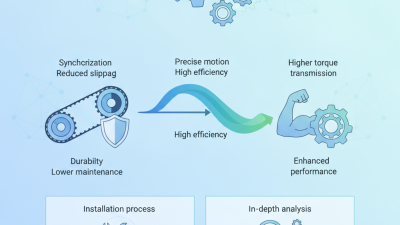
A Toothed Belt is a positive-drive component designed to transfer motion without relying on friction alone. Its molded teeth engage with matching pulley grooves, much like two precise gears connected by a flexible loop. This design supports accurate timing, controlled speed, and quieter operation in machinery ranging from conveyor systems to automotive engines.
Industry standards provide the technical foundation. ISO 13050 specifies synchronous belt drive systems, including belt profiles, dimensions, and compatibility requirements. Reports from Grand View Research and MarketsandMarkets also identify continuing demand for timing and synchronous belts across automotive, manufacturing, robotics, and material-handling equipment. Their findings reflect a practical trend: manufacturers want lighter, cleaner, and lower-maintenance power transmission solutions. The market is growing, but growth does not remove installation risks.
Small details matter.
Incorrect tension can create tooth skipping, excessive noise, or premature wear. Misalignment may leave visible dust near the pulley edge, while an undersized belt can stretch beyond its intended operating range. Gates engineering guidance and manufacturer service manuals consistently emphasize correct tensioning, pulley selection, alignment, and environmental limits. These are not optional checks.
In real maintenance work, a belt may appear acceptable while its internal reinforcing cords are already damaged. That is an uncomfortable fact. Inspection should therefore include tooth condition, belt width, pulley wear, tension, and operating temperature. Understanding how a Toothed Belt works is not merely academic. It helps engineers select the right drive, diagnose failures earlier, and avoid replacing a belt without correcting the underlying cause.
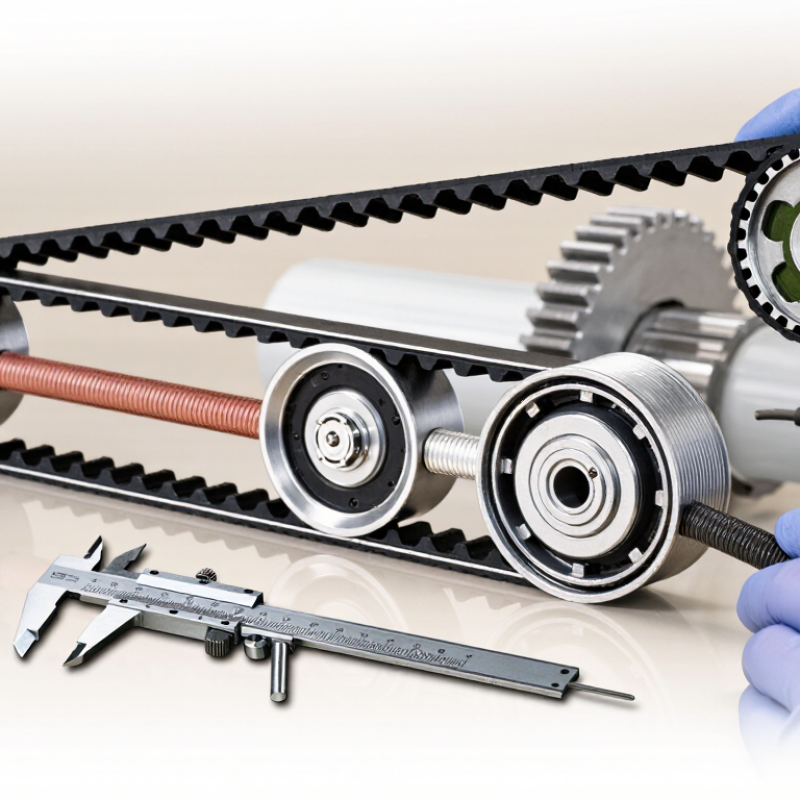
A toothed belt is a flexible power-transmission component with molded teeth along its inner surface. These teeth engage matching grooves on a toothed pulley. Unlike a smooth belt, it transfers motion through positive engagement, not friction alone. This helps maintain accurate timing between rotating shafts. It is also called a synchronous belt.
The belt body usually contains several key parts. The outer backing protects the internal structure from abrasion and contamination. Embedded tensile cords carry the pulling load and limit unwanted stretching. The tooth layer provides the exact profile needed for pulley engagement. Rubber or polyurethane materials are common, although their performance varies with temperature and chemical exposure. The pulley, flanges, and tensioning system work with the belt as one assembly.
In practical inspections, I look for cracked teeth, frayed edges, unusual noise, and uneven wear. A loose belt may jump teeth during sudden loading. An over-tight belt can increase bearing stress and shorten service life. Small alignment errors matter. No toothed belt is perfectly maintenance-free. Dust, heat, oil, and incorrect tension can change its behavior. Engineers should check the manufacturer’s dimensions, tooth pitch, load rating, and operating temperature before selecting a replacement. A visual check alone can miss internal cord damage. That is where routine measurement becomes important.
| Aspect or Component | Description | Role in Operation | Practical Note |
|---|---|---|---|
| Definition | A toothed belt, also called a timing belt or synchronous belt, is a flexible belt with regularly spaced teeth on its inner surface. | Its teeth engage with matching grooves on toothed pulleys to transmit rotary motion. | The belt and pulley tooth profiles and pitch must be compatible. |
| Toothed surface | The molded or formed teeth are arranged at a consistent spacing, known as the tooth pitch. | Engagement with the pulley grooves helps maintain a synchronized relationship between rotating shafts. | Tooth shape and pitch vary by belt design; matching parts are essential. |
| Tensile cords | Longitudinal reinforcing cords are embedded in the belt body. Depending on the design, they may be made from materials such as fiberglass, aramid, or steel. | They carry tensile load and help limit belt stretch during operation. | Cord material and construction depend on the application and required load characteristics. |
| Belt body and backing | The body supports the teeth and cords; the outer backing forms the belt’s smooth outer surface. Common belt-body materials include rubber compounds and polyurethane. | The body transfers forces through the belt, while the backing protects and supports its structure. | Construction varies; not every toothed belt uses the same materials or layer arrangement. |
| Tooth-facing layer | Some belts have a fabric or other wear-resistant covering over the teeth. | The covering can help reduce friction and protect the tooth surface, depending on the belt design. | A tooth-facing layer is not present on every toothed belt. |
| Toothed pulleys | Pulleys have grooves shaped to engage with the belt teeth. | A driving pulley moves the belt, which then turns the driven pulley through tooth engagement. | Correct alignment and compatible pulley geometry help support reliable engagement. |
| How motion is transmitted | As the driving pulley rotates, its grooves engage the belt teeth and pull the belt around the drive. | The belt carries motion to the driven pulley, maintaining a timed relationship when the system is correctly designed and installed. | Unlike a friction belt drive, a toothed belt transmits motion through positive tooth engagement and is designed to avoid normal operating slip. |
| Tension and alignment | The drive requires suitable belt tension and pulley alignment. | Proper setup helps keep the teeth engaged and reduces abnormal wear or tracking problems. | Follow the equipment or belt manufacturer’s installation specifications for tension and alignment. |
| Typical applications | Toothed belts are used in systems that need coordinated rotary motion, such as engine timing drives, printers, and industrial machinery. | They can synchronize rotating components without relying solely on friction between belt and pulley. | The appropriate belt depends on load, speed, operating environment, and required service life. |
Note: Toothed belt construction and installation requirements differ by application; use compatible belt and pulley specifications.
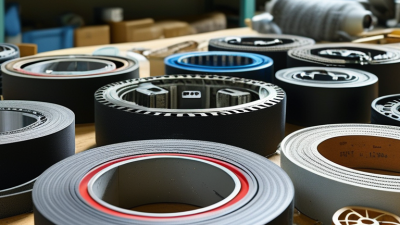
A toothed belt transfers rotary motion through molded teeth that engage matching grooves on a pulley. Unlike a friction belt, it depends on positive contact, so slipping is greatly reduced. Its pitch determines how teeth and grooves repeat around the drive. It needs alignment. Small errors matter.
Tooth shape affects noise, load capacity, and engagement. Trapezoidal teeth are simple and widely used for general motion control. Curvilinear teeth spread force more gradually and can handle higher loads. Engineers choose the profile according to speed, torque, and pulley size. The wrong profile can create vibration, even when the belt looks correctly installed.
Construction usually combines a flexible body, tension cords, and a protective tooth facing. Rubber offers useful flexibility and damping. Polyurethane often provides strong wear resistance and stable dimensions. Glass or aramid cords limit stretching, while nylon coverings reduce friction at the tooth surface. Materials must match the environment. Heat, oil, dust, and moisture can change belt life. In practical inspections, I have seen a clean belt fail because its cords had stretched internally. That failure is easy to miss. Measure pitch and tension. Check pulley alignment. A belt can appear tight yet carry uneven tooth loads. This is where maintenance becomes less certain, and the design deserves another look.
A toothed belt transfers motion through meshing teeth, not friction alone. Its molded teeth engage matching grooves on pulleys, creating synchronized rotation. This positive engagement prevents ordinary slipping when the drive accelerates, reverses, or carries changing loads. In a conveyor, one pulley drives the belt, while the belt carries torque to the second pulley. The result is controlled speed, accurate positioning, and quieter operation than many chain drives.
The U.S. Department of Energy’s Motor Systems Market Assessment reports that motor-driven equipment uses roughly one-quarter of U.S. electricity. Efficient power transmission therefore matters beyond a single machine. Industry engineering data commonly places correctly selected synchronous belt drives near 95–98% efficiency, although alignment, tension, temperature, and contamination can reduce performance. A two-millimeter alignment error can create uneven tooth loading. That small error may become a serious maintenance problem.
Tooth pitch determines timing. Belt width and tooth profile determine load capacity. Engineers also check pulley diameter, startup torque, and the number of teeth engaged. ISO 13050 provides terminology and dimensional guidance for synchronous belt drives, supporting consistent design and inspection. In practice, a belt can look healthy while its internal reinforcement has weakened. I have found that visual checks alone are not enough. A torque calculation may also miss shock loads from frequent stops. That is where field measurements, service records, and cautious replacement intervals become essential.
A toothed belt transfers motion through molded teeth and matching pulley grooves. It does not depend mainly on friction. This design reduces slip and preserves timing between shafts.
Common types include trapezoidal, curvilinear, and double-sided belts. Trapezoidal teeth suit general machinery and moderate loads. Curvilinear profiles distribute pressure more smoothly. They often support high-speed drives. Double-sided belts transmit motion from both surfaces. Automotive camshaft systems, packaging machines, conveyors, robotics, printers, and textile equipment use these designs. Polyurethane belts usually offer clean operation and accurate positioning. Rubber belts often provide better damping and flexibility. Steel, fiberglass, or aramid cords change strength and stretch behavior.
The 2024 Grand View Research report, Timing Belt Market Size, Share & Trends Analysis, estimates the global market at about USD 7.5 billion in 2023. It also projects growth near 6% annually through 2030. This growth reflects automation and compact power transmission needs. ISO 13050 provides dimensional guidance for synchronous belt drives. Yet selection is rarely perfect. Temperature, dust, pulley size, and installation accuracy can change service life. Small errors matter.
Tips: Check tooth engagement before choosing belt length. Keep pulleys aligned. Use the manufacturer’s tension method. Excess tension increases bearing loads. Low tension causes tooth jumping. Inspect for cracks, glazing, uneven wear, and cord exposure. Replace the belt when damage appears, even if the machine still runs.
A toothed belt transfers motion through meshing teeth between the belt and pulley, preventing slip and maintaining accurate timing. The chart compares common toothed-belt profiles by tooth pitch.
How to read the chart: Tooth pitch is the distance between corresponding points on adjacent teeth. Smaller pitches are commonly selected for compact, precise drives, while larger pitches are used when higher torque and load capacity are required. Actual belt selection also depends on speed, torque, pulley size, temperature, and the required accuracy.
A toothed belt transfers motion through molded teeth that engage matching pulley grooves. This positive drive limits slipping when tension and alignment are correct. Selecting one requires more than matching belt length. Check pitch, width, tooth profile, operating speed, transmitted load, temperature, and chemical exposure. Shaft distance and the smallest pulley diameter also matter. Measure twice. A belt chosen by appearance may fail early under shock loads.
Installation affects service life immediately. Inspect the pulleys for worn grooves, damaged flanges, and trapped debris. Align both shafts before fitting the belt. Never force it over a pulley with a screwdriver; this can damage the teeth or tension members. Set tension within the specified range, preferably with a calibrated gauge. Excessive tension can overload bearings. Low tension may cause tooth jumping during startup. It should be firm, not tight. Install guards after checking free movement and clearance.
Maintenance should include scheduled inspections, not only repairs after noise appears. Look for cracks, fraying, glazing, missing teeth, uneven wear, and oil or chemical contamination. Record running hours, temperature changes, and unusual vibration. Replace the belt when damage appears or when its service interval is reached. A visual check can miss internal fatigue, so relying on sight alone is a weak habit. Small wear matters. In practice, maintenance records are sometimes incomplete, and that uncertainty should influence replacement decisions. A clean environment, correct tension, and accurate alignment remain the most practical protections.