What are the Benefits of Synchronous Belts for Your Projects?
Synchronous belts are essential components in various mechanical projects. Their unique design offers several advantages over traditional belts. These belts are known for their precise motion and high efficiency in power transmission.
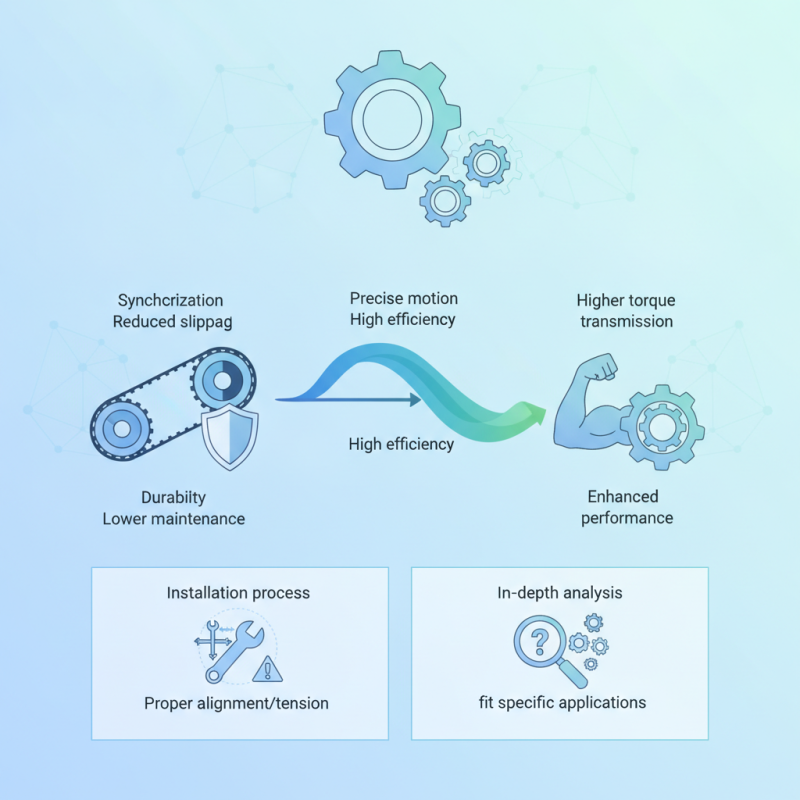
One key benefit of synchronous belts is their ability to maintain synchronization between components. This characteristic reduces the risk of slippage, leading to smoother operation. Additionally, they provide higher torque transmission, enhancing the overall performance of machinery. The durability of synchronous belts is noteworthy, often leading to lower maintenance costs in the long run.
However, it's crucial to consider the installation process. Improper alignment can lead to premature wear. Users must ensure proper tension to avoid potential failures. Despite their advantages, some projects may require alternative solutions. In-depth analysis is recommended to determine if synchronous belts fit specific applications.
Understanding Synchronous Belts and Their Functionality
Synchronous belts play a crucial role in many mechanical systems. They offer precise movement and synchronization between driven components. Their design allows them to transmit power efficiently by engaging with matching toothed pulleys. This interaction minimizes slip, ensuring that the driven parts maintain accurate timing. According to industry reports, a properly maintained synchronous belt system can improve energy efficiency by up to 98%.
The construction of synchronous belts incorporates materials that provide durability under stress. They often feature high-tensile strength fibers, contributing to their ability to withstand heavy loads. This resilience reduces the likelihood of belt failure, which can lead to costly downtime in operations. Studies indicate that regular inspection and maintenance can extend the lifespan of these belts, with some lasting over 25,000 hours of service.
Despite their advantages, not all applications may benefit from synchronous belts. Installation can be intricate and may require specific tools. In some scenarios, belt noise and vibration can be a concern. Understanding these limitations is essential for any project manager. Awareness of best practices can mitigate issues and lead to successful implementations. Engaging with professionals for insights can enhance overall project execution.
Benefits of Synchronous Belts for Your Projects
Key Advantages of Using Synchronous Belts in Mechanical Systems
Synchronous belts play a vital role in mechanical systems. Their design allows for precise timing and alignment between components. This precision leads to improved efficiency and reduced wear on parts. According to industry reports, synchronous belts can achieve an efficiency rate exceeding 98%. This is significantly higher than traditional V-belts, which typically operate at around 90% efficiency.
Another key advantage of synchronous belts is their ability to operate quietly. The continuous surface of the belt reduces noise compared to other belt types. Noise reduction is often critical in industries where a quiet environment is necessary, like in robotics or medical equipment. Furthermore, synchronous belts have a longer lifespan. Many can last up to three times longer than conventional belts. This longevity leads to less frequent replacements, reducing downtime and maintenance costs.
However, not all projects are ideal for synchronous belts. Improper installation can lead to issues. Over-tensioning can cause excessive wear, while under-tensioning might result in slippage. These challenges require careful consideration during the design phase. Ensuring proper alignment and tension is crucial for maximizing the benefits of synchronous belts. Companies must weigh these factors when deciding on their use in mechanical systems.
Comparative Analysis: Synchronous Belts vs. Traditional Belts
Synchronous belts offer significant advantages over traditional belts, particularly in precision applications. They utilize teeth to mesh with pulleys, enabling reliable transmission of power without slippage. This feature ensures that timing is accurate and consistent. In contrast, traditional belts rely on friction. Friction can lead to slippage, causing timing errors in critical operations.
Another key benefit is efficiency. Synchronous belts run cooler than their traditional counterparts. This means less energy loss and reduced heat generation. Traditional belts may require more maintenance due to wear from friction. Synchronous belts, however, tend to have longer service life and require less frequent replacements.
Despite their advantages, some drawbacks warrant consideration. Synchronous belts might require precise alignment during installation. This could be a challenge for some projects. Additionally, they can be more expensive initially. It’s crucial to evaluate the specific needs of your project against these factors. These considerations may prompt a deeper reflection on the right choice for your application.
Applications of Synchronous Belts in Various Industries
Synchronous belts are widely used across various industries in machinery and automotive applications. Their design allows for precise timing and movement. For instance, in manufacturing, these belts support conveyor systems, providing reliable power transmission. According to a report by the International Association of Machinists, improper belt alignment can reduce efficiency by up to 30%.
In automotive applications, synchronous belts are crucial for engine timing. They maintain the synchronization between the crankshaft and camshaft. A study by the American Society of Mechanical Engineers found that nearly 90% of modern engines utilize these belts. However, maintaining belt integrity can be challenging. Factors such as heat and contamination can lead to failures, requiring regular inspection.
In construction equipment, synchronous belts enhance the performance of heavy machinery. They can handle significant loads and resist slipping, which is essential in high-stress environments. Industry data indicates that these belts can improve energy efficiency by up to 20%. Despite these benefits, projects can face challenges with belt wear and stretch over time. Addressing these issues early is key to sustaining performance and minimizing downtime.
Maintenance and Longevity of Synchronous Belts for Optimal Performance
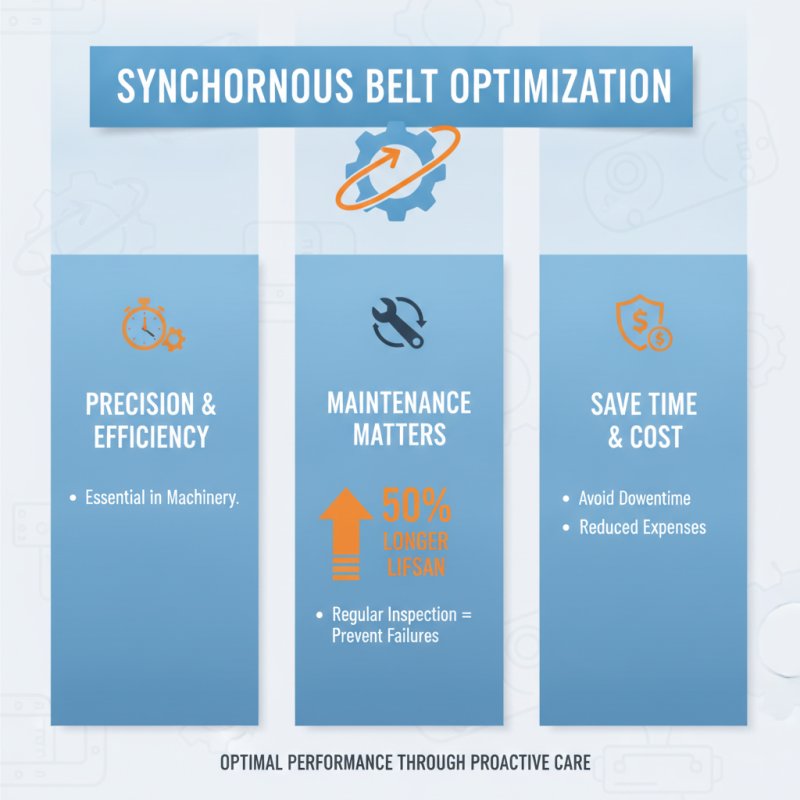
Synchronous belts are essential components in various machinery and projects, noted for their precision and efficiency. These belts require regular maintenance to maximize their lifespan and performance. Studies indicate that correctly maintained synchronous belts can last up to 50% longer than neglected ones. A regular inspection schedule can prevent unexpected failures, saving both time and costs.
Keeping synchronous belts clean is crucial. Dust, debris, or oil can significantly reduce their lifespan. Industry reports suggest that over 30% of belt failures stem from poor maintenance practices. Proper tension is similarly important; belts that are too tight can wear quickly, while those that are too loose may skip teeth. This delicate balance directly affects the output of machinery.
Moreover, the choice of materials impacts longevity. High-quality synthetic materials outperform standard ones in fatigue resistance and temperature stability. This choice adds another layer of reliability to synchronous belts. Addressing these details can help prevent common failures and prolong the operational life of your projects. Ignoring maintenance can lead to costly downtime and repairs, emphasizing the need for a proactive approach in managing synchronous belts.