How to Choose the Right Toothed Belt?
Choosing the right Toothed Belt starts with the machine, not the catalogue. A conveyor carrying dusty cartons has different needs from a compact packaging drive cycling at high speed. Engineers must match transmitted power, rotational speed, pulley size, centre distance, and operating hours. They also need to consider temperature, oil exposure, vibration, and available installation space. Small details matter.
Technical references help turn those conditions into a defensible choice. ISO 5296 specifies dimensions for inch-pitch synchronous belts and pulleys, while ISO 13050 covers metric-pitch curvilinear-tooth belt drives. Gates’ PowerGrip GT3 Drive Design Manual provides guidance on tooth profiles, load capacity, and drive design. The U.S. Department of Energy’s Improving Motor and Drive System Performance: A Sourcebook for Industry also explains why drive selection and maintenance affect system performance. These references are useful starting points, not substitutes for checking the equipment’s actual duty cycle.
A practical selection compares belt pitch, width, tooth profile, tensile-cord material, and pulley compatibility. For example, a narrow belt may fit between guards but lack the capacity for repeated start-stop loads. A larger belt may carry the load, yet require more space than the machine allows. There is no single best Toothed Belt for every application. And the catalogue rating is not the whole story. Confirm the manufacturer’s calculations, inspect alignment, and leave room for realistic service conditions. I would still question any recommendation that ignores contamination or shock loading; those are easy to overlook and costly to discover later.

Define the Application and Operating Requirements
Choosing a toothed belt starts with the job it must perform, not its catalogue dimensions. Define the driven load, speed range, start-up torque, duty cycle, and required positioning accuracy. Record the shaft spacing and available installation space, too.
Measure it first.
A belt carrying a steady fan load faces different demands from one indexing a conveyor through frequent starts and stops. Note whether the drive runs near heat, oil, dust, moisture, or washdown spray; these conditions can affect material choice and service life.
The U.S. Department of Energy’s Improving Motor and Drive System Performance sourcebook gives 95–98% as a potential efficiency range for belt drives. Treat that as a system-level benchmark, not a promise for every toothed-belt installation. Poor alignment, incorrect tension, or an unsuitable pulley can undermine performance.
Specify peak torque and acceleration, not just average power. Include expected operating hours and the consequences of a missed tooth or unplanned stoppage.
A common planning gap is overlooking brief overloads during start-up. It is easy to miss.
If requirements are uncertain, measure the existing drive under real operating conditions and document what remains unknown before selecting a replacement.
Choose the Tooth Profile and Belt Pitch
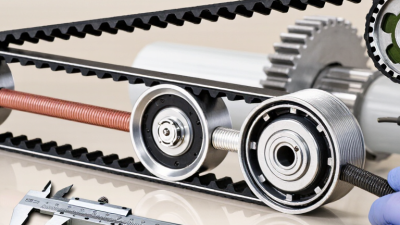
A toothed belt must match the pulley’s tooth profile and pitch, not just its width. Pitch is the distance between the centers of neighboring teeth. Even a small mismatch can cause poor engagement, noise, or premature wear. Trapezoidal profiles are common in general drives, while curvilinear profiles may suit applications needing smoother engagement or higher torque. The right choice still depends on the full drive design.
Tips: Check the pulley markings and equipment specifications. If measuring a belt, span several teeth and divide the distance by the number of intervals. One tooth can mislead. Also confirm the tooth count and belt length before ordering.
Consider speed, load, and positioning needs when comparing profiles. A conveyor carrying steady loads may tolerate more backlash than a system that must stop accurately. For a replacement, match the existing profile and pitch unless the pulleys are changing too. A useful rule, but not a perfect one: similar-looking teeth are not necessarily compatible. Verify the pulley drawing or consult a qualified supplier when dimensions are unclear; guessing can turn a simple replacement into repeated belt failure.
Select the Belt Material, Width, and Reinforcement
A toothed belt is only as reliable as its match to the job.
Start with the operating environment: temperature, moisture, dust, and contact with oils can change how a belt performs. Rubber compounds often suit flexible, shock-loaded drives, while polyurethane may offer useful wear and oil resistance. Formulations differ, so check the belt maker’s specifications rather than relying on material names alone. Match the tooth profile to the pulleys, too. A mismatch can cause noise, uneven wear, or skipped teeth.
Tips: Measure the pulley width and available space. Choose belt width for the actual load, not appearance. Wider is not always better.
Reinforcement cords control stretch and affect how the belt handles repeated starts, high torque, or precise positioning. Fiberglass, steel, and aramid cords behave differently; confirm which option suits the required tension and speed. Then check the drive’s load, duty cycle, and alignment against technical ratings. In practice, a belt that fits neatly may still fail early if the pulleys are misaligned. I would recheck that detail, even when the installation looks straight. It is easy to miss.
Match the Belt to the Pulley System and Load
How to Choose the Right Toothed Belt?
Match the Belt to the Pulley System and Load
Start with the pulley system already in place. Check the tooth profile and pitch, then choose a belt made to mesh with them. Even a small mismatch can cause noise, uneven wear, or skipped teeth. Small details matter.
Next, consider the load and operating conditions. A belt driving a lightly loaded fan has different demands from one accelerating a heavy conveyor. Note the required torque, speed, start-stop frequency, and any shock loads. These details help determine belt width and strength. Do not guess. Use the equipment specifications where available, and check the belt maker’s load ratings rather than relying on appearance alone.
Also account for the pulley diameters, center distance, and available adjustment. A belt that is too tight can strain shafts and bearings; one that is too loose may slip or lose tooth engagement. Temperature, oil, dust, and moisture can affect belt life, so identify what the belt will encounter. It is tempting to choose extra width as a safety margin, but that may not solve poor alignment or incompatible pulleys. Recheck those basics before installation, and verify tension using the equipment’s specified method.
Check Compatibility, Installation, and Maintenance Needs
A toothed belt must match the pulley profile, tooth pitch, width, and required length. A belt can look close and still ride poorly. Check the equipment manual, then compare the part dimensions with the pulley markings. Also consider operating conditions: heat, oil mist, dust, and frequent starts can affect belt material and service life. Measure carefully.
Tips: Turn off and secure the equipment before inspection. Check pulley alignment with a straightedge. Set tension to the specified range; overtightening can strain bearings, while slack can cause tooth skipping. Small details matter.
During installation, avoid levering the belt over a pulley, which can damage its teeth or cords. After fitting, rotate the system by hand if the machine design allows, and confirm the belt tracks evenly. Inspect for cracks, frayed edges, polished teeth, or unusual dust. Recheck tension after the initial run when the manual recommends it. Wear patterns can reveal misalignment or contamination, but they do not always point to one cause. I would record inspection dates and changes; memory is less dependable than it seems.
How to Choose the Right Toothed Belt? — Check Compatibility, Installation, and Maintenance Needs
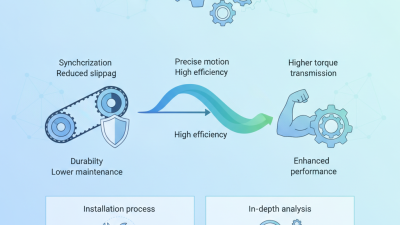
Use these checks as a practical selection guide: confirm the belt’s pitch, tooth profile, length, and width; check alignment, tension, and pulley condition during installation; and inspect for wear, contamination, and changes in tension or alignment during maintenance. The bars count checklist items, not measured performance. Follow the belt and equipment manufacturer’s specifications for application-specific requirements.