What is Flat Belt and How Does It Work for Industries?
In the industrial landscape, the concept of a Flat Belt plays a crucial role in various machinery. A Flat Belt is designed for power transmission, providing a seamless means of transferring energy from one component to another. According to a recent industry report from MarketsandMarkets, the global market for belt drives is projected to reach $2.7 billion by 2025, underscoring its importance in manufacturing processes.
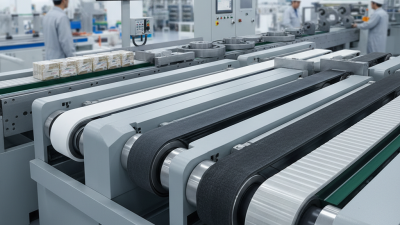
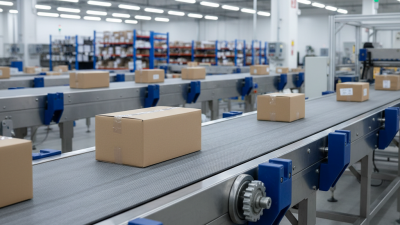
Flat Belts are essential in reducing friction, improving efficiency, and minimizing wear on equipment. Their flexibility allows adaptation to various pulley designs, making them suitable for diverse applications such as conveyors, HVAC systems, and industrial machinery. However, despite their advantages, there are challenges that companies must address. Issues such as belt misalignment and wear can lead to operational inefficiencies or equipment failure.
Understanding the mechanics of Flat Belts is key for industries aiming to optimize their processes. By investing in quality belts and regular maintenance, businesses can enhance their productivity. Yet, continual evaluation is necessary to ensure these systems are functioning as intended. Industry leaders must remain vigilant to not only implement these systems but also to adapt as new technologies emerge.
What is a Flat Belt?
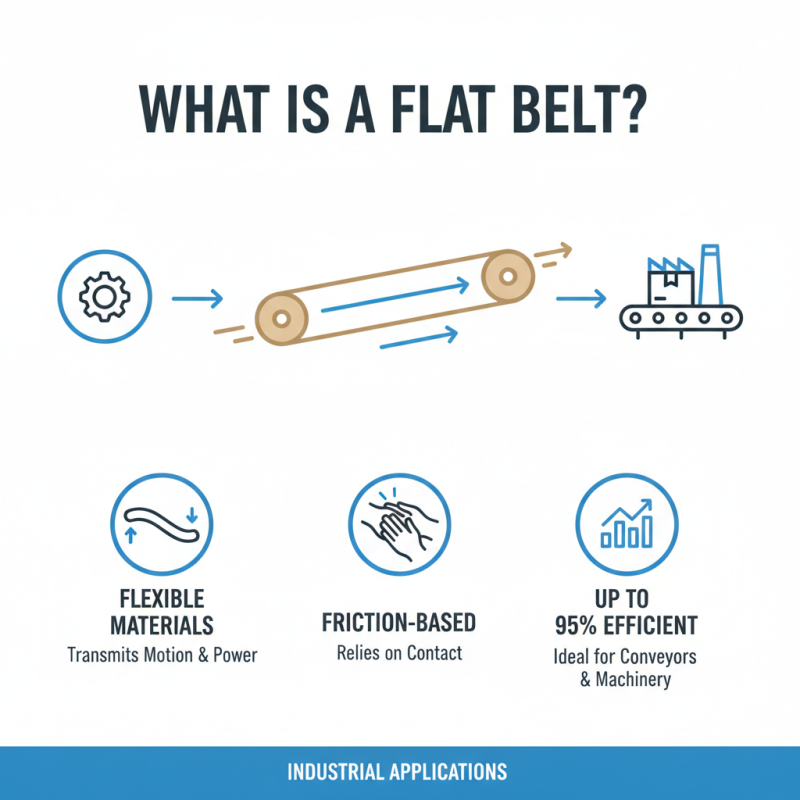
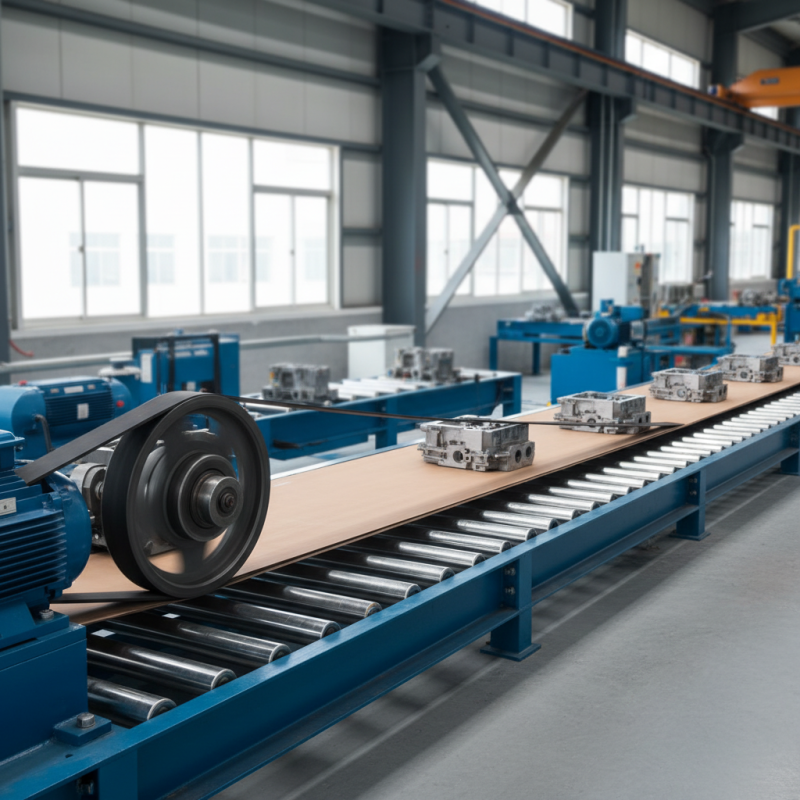
Flat belts are a fundamental component in various industrial applications. They are typically made from flexible materials, allowing them to transmit motion and power efficiently. Designed to be flat rather than rounded, these belts are unique because they rely on friction to move. In fact, industry reports indicate that flat belts can achieve efficiency rates of up to 95%. This capability makes them ideal for conveyor systems and machinery in manufacturing processes.
The versatility of flat belts is notable in their use across different sectors. They are employed in light-duty applications, such as in packaging, as well as in heavier applications, like in steel manufacturing. However, while they are effective, flat belts do face certain challenges. For instance, misalignment can cause uneven wear. This might lead to increased downtime for maintenance, which can be costly. According to industry studies, about 20% of scheduled maintenance in manufacturing facilities is related to belt misalignment.
Moreover, the materials used in flat belts can vary, affecting their durability and performance. Synthetic materials often provide better resistance to wear and tear. However, the initial costs can be higher. This raises questions about long-term investment versus immediate savings. In industries where efficiency and reliability are critical, the choice of belt material plays a significant role in overall productivity.
Historical Development of Flat Belt Technology
The historical development of flat belt technology is fascinating. It dates back to the early 19th century when the industrial revolution was in full swing. At that time, factories needed efficient ways to transmit power from motors to machinery. Early flat belts were made from leather, which was strong but not very durable. As industries grew, so did the demand for improved materials.
By the late 1800s, manufacturers began experimenting with rubber and fabric composite materials. These new belts provided increased flexibility and resistance to wear. They could also operate at higher speeds, which was crucial for modernizing production processes. During this period, flat belts became commonplace in mills and assembly lines. However, challenges remained. Issues like slippage and maintenance were prevalent. These factors forced engineers to rethink design and functionality.
The 20th century introduced advancements in manufacturing technologies. Synthetic materials enhanced the performance of flat belts significantly. Improved tensioning systems and pulley designs came into play. Even with these advancements, the technology is not without its flaws. Flat belts can still fail under extreme conditions, requiring ongoing assessment. The evolution of flat belt technology reflects a blend of innovation and occasional setbacks, showcasing the complexities of engineering solutions in industrial applications.
Principles of Operation for Flat Belt Systems
Flat belt systems are vital in various industrial applications. Understanding their principles of operation can enhance efficiency and productivity. The flat belt operates on a simple principle: it transfers power between pulleys through friction. The materials used for these belts play a crucial role. Commonly, they are made from rubber, fabric, or synthetic materials, ensuring durability and adaptability.
One key aspect to consider is the tension in the system. Proper tension maximizes transmission efficiency. According to industry studies, improper tension can reduce efficiency by 15% or more. Maintaining the correct alignment of pulleys also impacts performance. Even minor misalignments can lead to premature wear or failure. Regular inspections and adjustments are necessary to prevent costly interruptions.
Flat belts can also be sensitive to environmental factors. Temperature, humidity, and dust can affect their performance. Many reports suggest that belts operating in extreme environments require special consideration. Using wide belts can help in distributing load better. However, they may need an increased energy input. Each application demands a careful assessment of these aspects to ensure optimal functionality.
Applications of Flat Belts in Various Industries
Flat belts are crucial in various industries due to their efficiency and flexibility. They transfer power and motion between pulleys, playing a key role in manufacturing operations. According to a recent industry report, the global flat belt market was valued at over $3 billion in 2022 and is projected to grow significantly in the coming years.
In the automobile sector, flat belts are essential for driving engines and other components. They provide a reliable means of transferring energy, ensuring smooth operation. More than 70% of manufacturing plants now rely on flat belt systems for assembly lines. This statistic highlights their importance in maintaining production efficiency. However, some companies still face challenges with wear and tear, which can lead to unexpected downtime.
The agricultural industry also benefits from flat belts, using them in various machines for harvesting and processing. These belts help achieve higher productivity levels. Yet, reports indicate that improper installation can lead to issues, affecting overall functionality. This necessitates ongoing training for workers to ensure they understand best practices. Addressing these challenges is vital for optimizing operations in these sectors.
Advantages and Disadvantages of Using Flat Belts
Flat belts are widely used in various industries due to their unique characteristics. One key advantage is their ability to transmit power efficiently. They provide a smooth surface that reduces friction between the belt and pulleys. This efficiency leads to lower energy costs in the long run. Furthermore, flat belts can operate at high speeds, making them suitable for applications that require rapid movement.
However, there are disadvantages too. Flat belts often require regular tension adjustments to maintain optimal performance. If the tension is too loose, it may slip, leading to power loss. Conversely, excessive tension can cause wear and tear on the belt. Additionally, flat belts may not perform as well in environments with high temperatures or contaminants. These factors can affect their longevity and functionality.
Another consideration is the initial cost of installation. While flat belts can reduce energy expenses, the upfront investment might be significant. Industries must weigh these costs against potential savings. In some cases, alternative systems could provide more reliable performance. Understanding both the pros and cons is essential for making informed decisions about using flat belts in any application.