Choosing the right Endless Flat Belt can greatly impact the efficiency of your operations. With various materials, widths, and applications available, the selection process can seem overwhelming. The right belt can enhance performance, reduce downtime, and improve overall productivity.
Understanding your specific needs is essential. Consider factors like your machinery, load capacity, and environmental conditions. Each application may require a different type of Endless Flat Belt. For instance, a belt used in a food processing plant must meet strict hygiene standards.
Evaluating options can reveal imperfections in your current choices. Perhaps your existing belt wears out too quickly or slips during operation. Taking the time to assess these issues can lead to better solutions. Researching manufacturers and their offerings is crucial. This way, you can ensure you choose a reliable and durable Endless Flat Belt that meets your requirements.
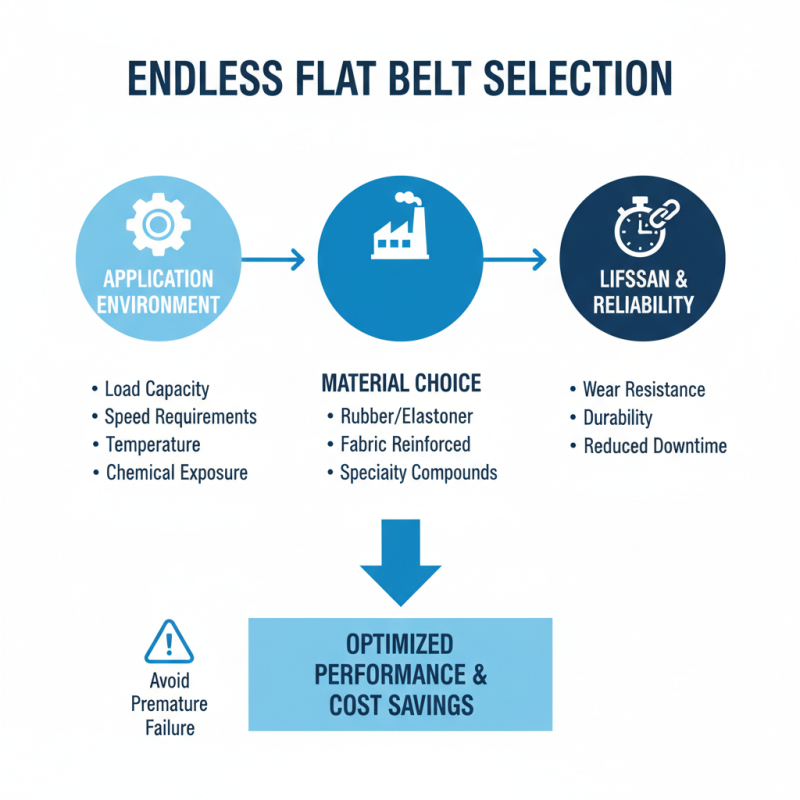
When selecting an endless flat belt, understanding its application environment is crucial. Consider the load it must carry and the speed requirements of the machinery. A belt that handles heavy loads poorly might wear out quickly, causing unexpected downtime. Material choice matters too; some materials perform better in high temperatures, while others resist chemicals effectively. Ignoring these factors may lead to premature failure.
Belt thickness and flexibility also affect performance. Thicker belts are more durable but less flexible, which can be a problem in systems with tight pulleys. Conversely, very thin belts may stretch or break under stress. Pay close attention to belt surface texture—smooth surfaces reduce friction but may slip, while textured belts provide better grip but increase wear on components.
Lastly, tension and alignment play significant roles in belt lifespan. Improper tension can cause slippage or excessive wear, while misalignment wastes energy and reduces efficiency. It may seem obvious, but many overlook the need for routine inspection and adjustment. These small details often separate a functional belt from one that needs constant replacement. Reflecting on real-world use, perfect choices are rare; compromises are common.

When choosing an endless flat belt, it's essential to understand the various types available and their applications. Endless flat belts are often made of various materials, such as rubber, fabric, or plastic. Each material serves different purposes based on specific requirements.
For instance, rubber belts are known for their durability and are used in heavy-duty applications. They are ideal for transporting heavy materials or machinery parts. Fabric belts, on the other hand, offer flexibility and are often preferred in light-duty tasks. They work well in environments where precision is key, such as in printing or packaging industries. Lastly, plastic belts are lightweight and resistance to various chemicals. They’re often used in food processing and pharmaceutical applications.
**Tips**: Evaluate the working environment. Humidity, temperature, and exposure to chemicals can affect belt performance. Always consult with professionals to ensure compatibility.
Not all belts will meet your needs perfectly. Sometimes, trial and error is necessary to find the right one. Monitor performance regularly. Adjustments might be needed as conditions change.
**Tips**: Keep detailed records of the belt's performance. This data can provide insights when evaluating options in the future. Remember that choosing the right endless flat belt goes beyond initial selection; it involves ongoing assessment and adjustments.
Choosing the right endless flat belt involves precise measurements. The right fit is crucial for performance. To measure correctly, start with the width of your existing belt. Use a caliper or a ruler to get an accurate measurement. Note that even small discrepancies can affect the belt's efficiency.
Next, consider the length. Measure the distance around the pulleys or the entire drive system. This can require some creativity. Use a length of string to trace your system and then measure the string. Ensure that it is taut but not overly tight. You will need to check this multiple times. Mistakes often happen during this step.
Finally, pay attention to belt thickness. An incorrect thickness can lead to issues over time. Sometimes, people overlook this detail. If your belt is too thick, it may not fit well in the pulley grooves. Conversely, a thin belt can wear out faster. Making adjustments is always a good idea. A little reflection on these factors will lead to better choices. Taking the time to measure accurately is always worth it.
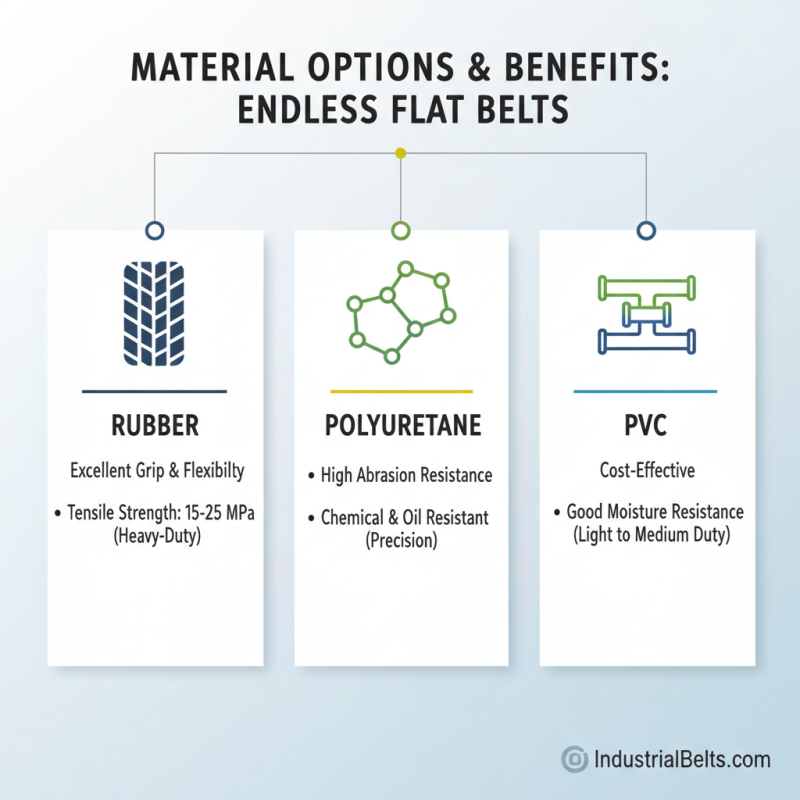
When selecting an endless flat belt, understanding material options is crucial. Common materials include rubber, polyurethane, and PVC. Each material has unique properties that can benefit different applications. For example, rubber belts offer excellent grip and flexibility. According to industry reports, rubber belts typically have a tensile strength of around 15-25 MPa, making them ideal for heavy-duty tasks.
Polyurethane belts, on the other hand, are known for their durability and resistance to abrasion. These belts can operate in extreme temperatures, making them suitable for various environments. Data shows that polyurethane belts can last up to three times longer than their rubber counterparts in specific applications. However, their higher cost may not suit every budget.
When choosing a belt, consider the specific needs of your application. Avoid a one-size-fits-all approach. Assess your operational requirements carefully. It’s essential to balance cost, durability, and performance. A thorough material comparison can save time and money in the long run. Remember, not every material suits every application. Always check compatibility.
Tip: Regularly inspect belts for wear and tear. Early detection can prevent costly downtime. Additionally, consult with industry experts when unsure about material selections. They can offer insights based on the latest market trends and technological advancements in belt manufacturing.
Maintaining the longevity of your endless flat belt is crucial for operational efficiency. A report by the International Council on Mechanical Power Transmission indicates that proper maintenance can extend the lifespan of flat belts by up to 50%. Regular inspections should focus on tracking wear patterns and detecting signs of damage. Always keep the belt clean, as dirt buildup can lead to premature wear and slippage.
One key tip is to ensure correct tension on the belt. Under or over-tensioning can cause significant issues. A study from the Mechanical Engineering Journal states that optimal tension improves energy efficiency by 5-10%. Additionally, explore environmental factors; extreme temperatures and humidity can impact performance. Store belts in a cool, dry place when not in use.
Lubrication is essential but must be done carefully. Over-lubrication can attract dirt, while inadequate lubrication can cause friction. Aim for a balance, and always follow industry guidelines for lubrication intervals. Remember, even seasoned operators can overlook these details. Routine audits of your belt systems can reveal overlooked problems and foster improvements. Pay attention to details to maximize your belt's potential.