In 2026, choosing a Flat Timing Belt involves more than selecting a material. A conveyor may need stable tracking and resistance to moisture, while a compact positioning system may prioritize repeatability and low backlash. The right choice depends on load, speed, pulley diameter, temperature, and exposure to oils or cleaning agents. Small details count.
That sounds simple. It isn’t always. Common options include rubber belts for flexible, quiet operation and polyurethane belts for wear resistance and dimensional stability. Reinforcement also matters: steel cords can support precise motion, while aramid cords may suit applications where lower weight or flexibility is useful. Some designs use teeth on one side; others are double-sided, open-ended, or joined into endless loops. Each construction brings trade-offs, and product names alone do not prove suitability.
This guide compares the leading types by construction, operating strengths, and practical limitations. It also considers how pulley size, installation tension, and the working environment affect belt life. These are not minor installation notes; poor alignment can cause uneven wear even with a well-chosen belt. Specifications should be checked against the machine maker’s requirements and the belt manufacturer’s technical data. A catalogue may not tell the whole story. Where operating conditions are unclear, measuring the existing system and confirming duty-cycle details can prevent a costly mismatch. The “top” belt is the one that performs reliably in its actual application—not simply the one with the longest feature list.
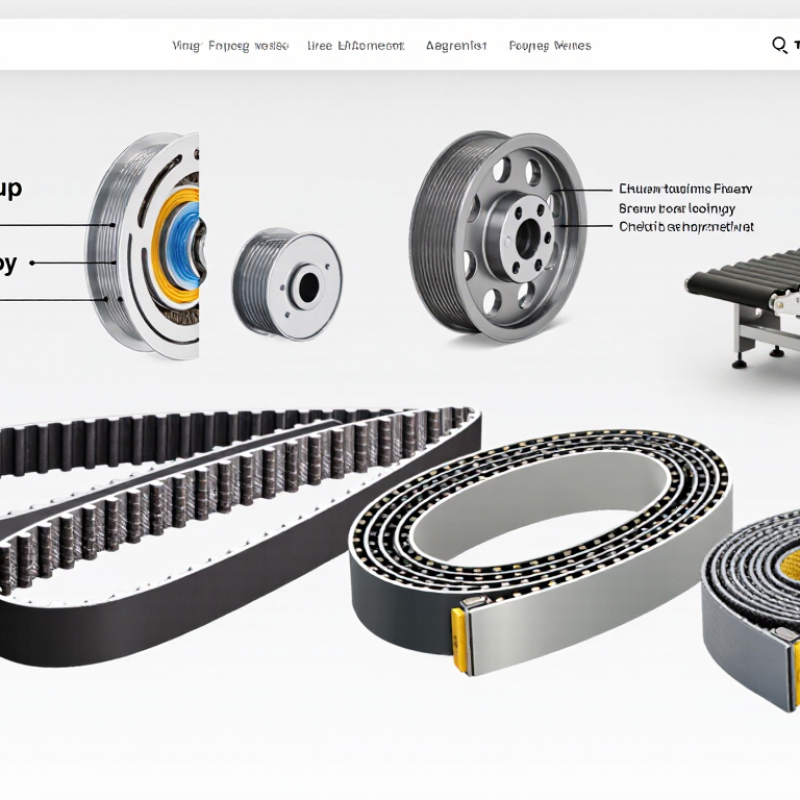
A flat timing belt is usually a synchronous belt with a smooth outer back and teeth on its inner surface. The teeth engage matching grooves in pulleys, helping keep the driven shaft’s position synchronized with the motor shaft. Unlike a friction-driven flat belt, it transfers motion through tooth engagement. That difference matters when a mechanism must maintain repeatable timing.
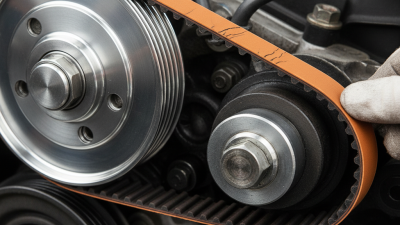
In operation, the belt bends around pulleys as they rotate. Its tension keeps the teeth seated, while its tensile cords limit stretching under load. For example, on a compact conveyor, a correctly aligned belt can carry a part past a sensor at a predictable moment. Small errors add up. Excessive tension can strain bearings; too little may let teeth skip. Dust, heat, and repeated flexing can also affect service life.
The smooth back can support contact with rollers or guides, but it is not automatically suitable for every application. Check the belt profile, pulley dimensions, operating temperature, and manufacturer’s tension guidance before installation. A practical detail is easy to miss: a belt may look sound while its cords are already fatigued. Inspection helps, though visual checks cannot reveal everything.

Timing Belt Guide
What Are the Top Flat Timing Belt Types in 2026?
Flat timing belts have a smooth backing and molded teeth on the inner face. Their construction usually combines a polymer body with tensile cords that resist stretching. Common body materials include polyurethane and rubber; cord options include fiberglass, steel, and aramid. Each choice affects flexibility, load capacity, wear, and resistance to oil or heat. No single build suits every drive.
A practical way to classify belts is by tooth profile and pitch, reinforcement, and material. ISO 5296:2012 documents six inch-series profiles: MXL, XL, L, H, XH, and XXH. The profile and pitch must match the pulley; a small mismatch can cause noise, uneven tooth wear, or skipped engagement. This standard is a useful dimensional reference, but it does not predict service life in every application. Real operating conditions matter.
Tips
Check pulley markings and measure belt width before ordering. For a dusty or hot machine, confirm the belt material’s environmental limits. Keep a spare. It is easy to overlook cord construction, yet it can change how a belt behaves under repeated tension.
What Are the Top Flat Timing Belt Types in 2026?
The Main Flat Timing Belt Types Available in 2026
Flat timing belts have a flat outer back and teeth on the drive side. Their construction and tooth shape determine how they perform. Polyurethane belts with steel or aramid cords are common where accurate positioning and resistance to stretching matter. They suit clean, controlled applications, but may not be the best choice around heat or abrasive debris.
Rubber-based belts, often reinforced with fiberglass cords, can handle repeated flexing and are used in many general-purpose drives. Tooth profiles also vary: trapezoidal teeth are familiar and straightforward, while curvilinear profiles can provide smoother engagement in suitable systems. Double-sided belts have teeth on both faces, allowing multiple shafts to be driven without adding a second belt. Small details matter.
Some belts are supplied as open lengths for custom joining; others arrive endless for continuous operation. The right option depends on pulley dimensions, speed, load, temperature, and the surrounding environment. Check the manufacturer’s technical data and confirm belt-to-pulley compatibility before specifying a replacement. A belt that looks close may still track poorly or wear early. Not always. Real installations can be less tidy than a catalog chart, so inspect alignment and tension under operating conditions.
Common inch-series trapezoidal timing belt profiles, compared by nominal tooth pitch.
Pitch is the distance between corresponding points on adjacent teeth. Values shown are standard nominal pitches: MXL (0.080 in), XL (0.200 in), L (0.375 in), H (0.500 in), XH (0.875 in), and XXH (1.250 in). Select a profile based on the required pulley geometry and application; availability and specifications vary by belt construction.
When comparing flat timing belts, confirm what “flat” means in the equipment specification. A smooth flat belt transfers power through friction; a timing belt uses teeth to maintain synchronized motion. The terms can be confusing. Check the belt drawing and pulley profile before comparing materials.
For light, clean-duty applications, a flexible polyurethane belt may offer low noise and resist oils, depending on its formulation. Rubber belts can suit demanding drives where flexibility and shock absorption matter. Reinforcement also changes performance: fiberglass cords limit stretch, while steel cords may support higher tension but need suitable handling. Match belt width, pitch, tooth profile, and pulley diameter to the actual drive. A mismatch can cause tracking problems or premature wear.
Then compare operating conditions, not just advertised strength. Note the starting load, speed changes, temperature, dust, and exposure to moisture. A belt running near a warm motor may behave differently from one in a cool enclosure. Check the manufacturer’s load and temperature data, and inspect belt tension and alignment during installation. In practice, alignment is easy to overlook. I would not choose a belt from a catalog description alone; measure the existing drive and verify its requirements first.
| Belt type or construction | Typical construction | Key characteristics | Potential limitations | Common applications | Best comparison criteria |
|---|---|---|---|---|---|
| Rubber trapezoidal-tooth belt | Rubber-based body with tensile cords, commonly fiberglass or another specified reinforcement; trapezoidal tooth profile. | Widely used synchronous-belt design; suitable for many general drive systems when matched to the correct pulley profile and load. | Tooth engagement can be less smooth than some curvilinear profiles. Performance depends on belt compound, cord, pulley size, and operating conditions. | General machinery, office equipment, and light-to-medium-duty drives. | Tooth pitch and profile, pulley compatibility, allowable load, speed, temperature, and required belt life. |
| Rubber curvilinear-tooth belt | Rubber-based belt with a curved tooth profile and tensile reinforcement; profile families vary by design. | Tooth shape can provide smooth engagement and support higher load capacity than comparable trapezoidal designs when the system is properly engineered. | Must use compatible pulleys. Capacity and noise depend on the specific profile, belt width, tension, and drive layout. | Industrial drives, conveyors, and machinery requiring accurate synchronous motion. | Exact tooth profile, pulley design, peak and continuous torque, speed, and shock loading. |
| Polyurethane synchronous belt | Polyurethane body with tensile cords, often steel or other specified reinforcement; available in multiple tooth profiles. | Often selected for abrasion resistance and clean operation; polyurethane compounds commonly resist oils and greases better than many rubber compounds. | Temperature capability and chemical compatibility vary by formulation. Steel-cord versions may require attention to minimum pulley diameter and reverse bending. | Packaging machinery, conveying, linear positioning, and applications where clean running or wear resistance is important. | Compound compatibility, cord material, minimum pulley diameter, required positioning accuracy, and operating temperature. |
| Double-sided timing belt | Teeth on both belt faces; available in different belt materials, reinforcement types, and tooth profiles. | Can transmit motion from both sides of the belt and drive multiple pulleys in a compact layout. | Both tooth faces and the routing arrangement must be compatible with the drive design. Reverse bending and idler placement can affect belt life. | Multi-shaft drives, packaging equipment, and mechanisms with alternating or opposing pulley engagement. | Tooth profile on each face, routing, reverse-bend diameter, tension, and the loads on all driven shafts. |
| Open-ended timing belt | Continuous length supplied by the metre or roll, commonly used with matching tooth profiles and reinforcement. | Can be cut to length and attached at its ends for linear-motion systems; useful for long travel distances. | End attachment and belt length affect system strength and accuracy. It is not interchangeable with an endless belt without redesign. | Linear actuators, gantry systems, automated positioning, and long-travel mechanisms. | Travel length, end-connection method, required positioning accuracy, tensile load, and supported belt span. |
| Endless timing belt | Closed-loop belt manufactured or joined into a continuous loop; material and reinforcement vary. | No belt ends are needed for the drive loop. Suitable for rotary power transmission when correctly sized and installed. | Loop length and installation method must suit the machine. Joined and manufactured endless belts may differ in construction and strength. | Rotary drives, conveyors, printers, and production machinery. | Loop length, joint construction if applicable, tensile rating, pulley alignment, and installation access. |
Selection note: There is no single “top” belt type for every application. Confirm tooth profile and pitch, belt width, cord material, pulley compatibility, load, speed, temperature, chemicals, tension, and the manufacturer’s engineering limits for the specific drive.
A flat timing belt should be selected around the motion it must control, not its appearance alone. For accurate indexing, check tooth pitch and profile against the pulley. A mismatch can cause noise, uneven wear, or skipped teeth. For lighter loads, a narrow belt may be sufficient; heavier loads often need more width and a suitable tension rating. Fit matters.
Operating conditions narrow the options. In a warm enclosure, confirm the belt material’s temperature range. Oil, cleaning fluids, and abrasive dust can also affect service life. A belt used near a small pulley may flex more sharply, so verify the manufacturer’s minimum pulley diameter. Check shaft alignment, too. Even a strong belt can wear quickly when the pulleys sit slightly out of line.
Compare belt speed, starting loads, duty cycle, and available installation space before choosing a type. A quieter belt is not automatically the best one if it cannot carry the required load. Measure the existing pulleys rather than relying only on a worn belt. A tidy calculation can still miss vibration or sudden starts; those details deserve a real operating test. It happens. Plan regular inspections for fraying, tooth damage, and unusual slack, especially after installation.