How to Choose the Right Timing Pulleys for Your Project?
Choosing the right timing pulleys for your project can greatly impact its success. John Smith, a renowned expert in mechanical engineering, once stated, "The right timing pulleys can mean the difference between a smooth operation and a frustrating failure." This quote emphasizes the critical role that these components play in various applications.
Timing pulleys are essential in transmitting motion with precision. They help synchronize movement between rotating shafts. Understanding different specifications is crucial. For example, factors such as tooth count, material, and size can affect performance. Selecting the wrong type or size might lead to misalignment or excessive wear.
Each project has unique requirements. An effective choice involves understanding your needs and how various timing pulleys can fulfill them. Thus, consider conducting thorough research and consulting industry professionals. Remember, even minor oversights can lead to bigger challenges down the line.
Understanding Timing Pulleys: Types and Applications
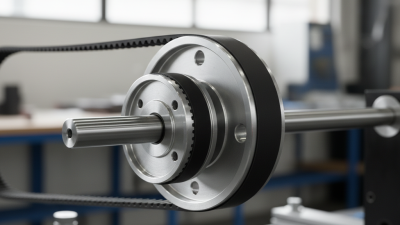
Timing pulleys are crucial components in mechanical systems, helping to transfer rotational motion efficiently. The right timing pulley can affect the overall performance and efficiency of a project. Selecting the correct type depends on specific applications, load requirements, and environmental conditions.
There are various types of timing pulleys, each engineered for specific tasks. Synchronous timing pulleys, for instance, are commonly used in conveyor systems. They ensure that the belt maintains proper tension during operation. According to the Power Transmission Distributors Association (PTDA), these pulleys can improve efficiency by reducing slippage and wear. However, if chosen incorrectly, they may cause system failures or reduce lifespan.
Additionally, the materials used in timing pulleys impact their applications. Aluminum pulleys are light and corrosion-resistant, suitable for automotive sectors. In contrast, steel pulleys offer high durability for heavy-duty applications. The market data from the Global Timing Pulley Market Report suggests a significant growth rate of 5.3% annually, indicating a rising demand. It's essential to analyze these factors carefully. Failure to consider specifics like load and environment can lead to costly mistakes.
Timing Pulleys: Types and Their Applications
Factors to Consider When Selecting Timing Pulleys
Choosing the right timing pulleys for your project involves several critical factors. One primary consideration is the pulley material. Common choices include aluminum, plastic, and steel. Each material has different strength and weight properties. For instance, aluminum is lightweight and strong but may not be ideal for environments with high corrosion risk. Plastic is cost-effective but has limitations in terms of load capacity.
Another essential factor is the pitch and size of the pulley. The pitch determines how well the belt engages with the pulley, directly affecting performance and efficiency. According to industry reports, improper pitch selection can lead to a 15% loss in operational efficiency. It's vital to match the pulley size with the intended motor to optimize speed and torque. This alignment minimizes wear and prolongs the lifespan of both the belt and pulleys.
Additionally, the application requirements must be assessed. Speed, load capacity, and vibration tolerance all influence the choice of pulleys. For applications requiring high-speed operations, stringent tolerances may be necessary to prevent belt slippage. A recent survey indicated that 30% of mechanical failures are attributed to poor pulley selections. Analyzing these factors deeply can lead to better project outcomes and reduced risks in mechanical failures.
Calculating the Required Gear Ratios for Your Project
Calculating the required gear ratios for your project is a vital step in ensuring optimal performance. Gear ratios determine how much power is transmitted from the motor to the driven component. When choosing timing pulleys, understanding these ratios helps match the speed and torque to your needs.
To find the ideal ratio, begin by assessing your project's requirements. Consider the input speed of your motor and the desired output speed. For example, if your motor runs at 1,500 RPM and you want the output to be 300 RPM, your gear ratio should be 5:1. This ratio means that for every five revolutions of the motor, the output pulley will complete one.
Tips: Always verify your calculations with real-world tests. It's easy to misjudge gear ratios, leading to oversizing or undersizing components. Another common mistake is overlooking load factors. Ensure your chosen pulleys can handle the stress applied during operation.
Choosing the correct timing pulleys is also about fine-tuning. Even slight adjustments in pulley sizes can yield substantial differences in performance. Experiment with different combinations. Reflect on previous projects. Did you face issues with torque or speed? Use that knowledge to improve your current calculations.
Material and Size Selection for Timing Pulleys
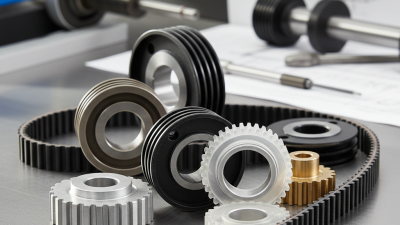
When selecting timing pulleys for your project, material and size are critical aspects. Timing pulleys are often made from materials like aluminum, steel, or plastic. Each material has its strengths. For instance, aluminum is lightweight and resistant to corrosion, making it ideal for applications where weight is a concern. Steel, on the other hand, can withstand higher loads but tends to be heavier. According to industry reports, nearly 65% of engineers prefer aluminum for lightweight machinery, while 30% opt for steel for higher strength.
Size is another significant factor. Pulleys come in various diameters and tooth counts. Choosing the wrong size can lead to inefficiencies or system failures. The pitch of the belt must match the pulley size. Mismatched components often result in increased wear or noise. Studies indicate that about 40% of mechanical failures are linked to poor sizing of pulleys and belts. It is essential to measure the desired speed and torque output of your project, as these will guide your selection.
Reflecting on past decisions can be useful. Many engineers have faced challenges after selecting pulleys without thorough assessments. Knowing the load requirements and ensuring precise alignment is crucial. Discrepancies can lead to unexpected downtime and increased costs. Prioritizing careful material and size selection can enhance reliability and performance in mechanical systems.
Best Practices for Installing Timing Pulleys in Your System
When installing timing pulleys, precision is crucial. Proper alignment ensures optimal performance and longevity of your system. Reports indicate that misalignment can reduce efficiency by up to 30%. Take time to measure distances accurately. Even a slight deviation might lead to poor operation and premature wear.
While setting up pulleys, consider the material. High-quality materials can withstand more stress and provide better durability. Studies recommend using aluminum or reinforced plastics for high-load applications. However, not all projects require heavy-duty options. Analyze your specific needs and adjust accordingly.
Don’t overlook the installation process. Follow manufacturer guidelines closely. Use the appropriate tools to ensure that the pulleys are tightly secured. A well-installed pulley can last over 10 years, while a poorly installed one may fail within months. Regular maintenance checks can uncover issues before they escalate. Embrace a thorough approach to installation, and you’ll foster reliability in your timing systems.