Inquiry
Leave Your Message

Why Choose Chain Sprockets for Industrial Applications?

Why choose Chain Sprockets for industrial applications? The answer begins with dependable power transmission. Unlike friction-based systems, chain drives maintain a positive connection between the driving and driven shafts. Slippage is not their normal behavior. This matters in conveyors, packaging equipment, agricultural machinery, and production lines that require steady timing.

Mechanical engineering author Robert L. Mott captures this principle clearly: “Chain drives transmit power positively, without slip.” His observation explains why properly selected Chain Sprockets remain valuable in demanding workplaces. They handle high torque, tolerate moderate shock loads, and operate across practical center distances. A hardened tooth profile can also improve service life under repeated loading. The result is controlled movement, even when machines run for long shifts.

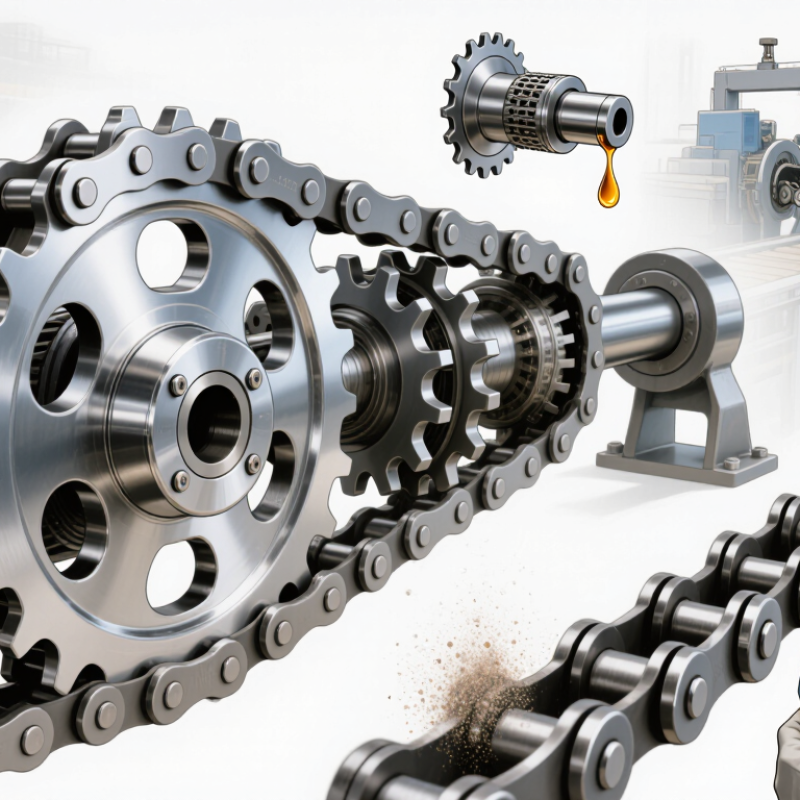
The details still matter. Poor alignment can create uneven wear. Insufficient lubrication can produce heat, noise, and premature failure. Dust may work into the chain joints. It is not magic. Engineers must match sprocket size, chain pitch, speed, load, and operating environment. Routine inspection should check tooth hooking, elongation, corrosion, and loose mounting hardware.

In my experience, the best design is rarely the cheapest component. It is the one that remains predictable after thousands of operating hours. That judgment can be imperfect, especially when real loads exceed catalog assumptions. Yet this is exactly why Chain Sprockets deserve careful engineering review. When selection, installation, and maintenance work together, they provide a practical balance of durability, timing accuracy, and repairability for industrial systems.
Why Choose Chain Sprockets for Industrial Applications?

What Are Chain Sprockets and How Do They Work?

Chain sprockets are toothed wheels that engage a roller chain. The chain’s pins fit between the sprocket teeth, transferring torque without relying on friction. A driving sprocket turns, while the chain carries motion to a driven sprocket. This simple arrangement supports conveyors, packaging machines, agricultural equipment, and process lines. ISO 606 and ANSI B29.1 define important dimensions for roller chains and sprockets, including pitch, tooth form, and compatibility. Correct matching matters. Even a small pitch error can create vibration, noise, and accelerated wear.

Engineering references commonly report roller-chain drives at roughly 95–98% efficiency under suitable operating conditions. A U.S. Department of Energy industrial motor-system guide also emphasizes alignment, lubrication, and tension as key factors in mechanical transmission performance. In practical maintenance work, clean oil, guarded sprocket teeth, and steady chain tension often matter more than impressive specifications. Dust changes the outcome. Misalignment can pull the chain sideways and wear the tooth flanks unevenly. That assumption can fail. A larger sprocket may reduce articulation stress, but it also needs more space and can raise system cost. Operators should inspect elongation, tooth hooking, temperature, and unusual clicking sounds during scheduled checks. The data helps, but field conditions still decide whether a chain drive performs reliably.
Key Features of Chain Sprockets for Industrial Systems

Chain sprockets support reliable power transfer in conveyors, mixers, pumps, and packaging equipment. Their key features begin with accurate pitch, tooth form, bore size, and keyway fit. ANSI B29.1 and ISO 606 provide dimensional guidance for roller-chain systems. Following these standards reduces engagement errors and uneven loading.

Material choice matters. Hardened steel teeth resist wear under repeated cycling, while corrosion-resistant options suit washdown areas. Proper alignment is equally important. A sprocket can look acceptable but still create noise, vibration, and chain elongation when shafts are offset.

The U.S. Department of Energy reports that motor-driven systems consume about 69% of industrial electricity. Efficient chain engagement cannot solve every energy problem, but it can reduce avoidable mechanical losses. In practice, I have seen maintenance teams replace chains while ignoring worn sprocket teeth. That approach rarely lasts.

Tips:

Check tooth wear during every planned inspection. Measure chain elongation, confirm shaft alignment, and inspect the keyway for movement. Keep lubrication suitable for the operating temperature and dust level. Guard the drive, too. Safety details are sometimes treated as secondary, which is a mistake.

One overlooked factor is operating shock. A sprocket selected only by nominal power may fail under frequent starts, jams, or reversing loads. Allowing for service factors and real duty cycles is more reliable than relying on catalogue ratings alone. Data from the U.S. DOE motor-systems guidance and ISO 606 dimensional practices can support a more defensible selection process.

Why Chain Sprockets Suit Demanding Industrial Applications

Chain sprockets suit demanding industrial applications because they transfer rotary motion with predictable timing. In steel mills, packaging lines, and material-handling systems, this consistency matters. A properly selected sprocket keeps chain engagement steady during repeated starts, stops, and changing loads. Teeth must match chain pitch, roller diameter, and working conditions. Small errors create vibration, accelerated wear, or unexpected downtime. That is not theoretical. Maintenance teams see it through worn tooth profiles and polished chain plates.

Industrial suitability also comes from practical flexibility. Sprockets can support different shaft layouts, speed ratios, and conveyor requirements. Hardened teeth may improve service life where dust, shock loads, or frequent cycling are present. However, material selection cannot replace correct alignment. During inspections, technicians should check lubrication, shaft parallelism, chain elongation, and tooth wear. A quiet drive is encouraging, but it does not prove safe operation. Measurements remain more reliable than assumptions.

There is no perfect sprocket choice. A design optimized for maximum strength may add unnecessary cost or inertia. A low-cost option may fail sooner in abrasive environments. Engineers should review load data, duty cycles, temperature, and maintenance access before approval. Real operating records often reveal details missed during design. Even experienced teams can overlook contamination from nearby processes. That deserves honest review. Clear specifications and scheduled inspections make performance more dependable over time.

How to Select the Right Chain Sprocket

Choosing the right chain sprocket begins with the chain, not the sprocket itself. Match the sprocket pitch, roller diameter, and chain width precisely. A small mismatch can create vibration, rapid wear, or unexpected noise. In field inspections, tooth profiles often reveal problems before a complete drive failure occurs.

Tooth count affects speed, torque, and chain movement. Fewer teeth increase bending stress and usually create rougher engagement. More teeth can improve service life, but they may require extra installation space. Confirm the required bore, keyway, and shaft diameter before ordering. Check the operating speed and peak load, not only the average load. A conveyor carrying wet material needs different protection from a clean packaging machine. Corrosion-resistant finishes or suitable stainless materials may be necessary.

Alignment deserves careful attention. Even a correctly sized sprocket can fail when shafts are not parallel. Use a straightedge or laser tool during installation, then inspect chain slack after several operating hours. Lubrication should match the speed, temperature, and surrounding conditions. Too little lubricant increases friction; too much can collect dust. Calculations help, but they do not show every real-world force. Start-up shock, fluctuating loads, and poor maintenance can change the result. I would rather review the selection twice than trust a catalog dimension alone. Record the chain specification, tooth count, material, bore, and inspection findings for future maintenance.

Why Choose Chain Sprockets for Industrial Applications? - How to Select the Right Chain Sprocket

Use this selection guide to match chain sprocket dimensions, configuration, material, and operating requirements with the needs of an industrial drive system.

Selection Dimension Common Option or Standard Key Technical Data Industrial Advantage Selection Guidance
Chain Compatibility ANSI roller chain or ISO roller chain Confirm the chain series, pitch, roller diameter, inner width, and chain number before selecting the sprocket. Correct geometry provides positive engagement and reduces premature wear, vibration, and chain jumping. Do not select a sprocket by pitch alone; the roller diameter and tooth profile must also match the chain.
ANSI Chain #40 Small industrial conveyor and drive systems Pitch: 0.500 in (12.70 mm); approximate roller diameter: 0.312 in (7.92 mm). Compact dimensions suit light-duty power transmission where installation space is limited. Use only when the calculated working load and service factor are appropriate for the application.
ANSI Chain #50 Light- to medium-duty industrial drives Pitch: 0.625 in (15.88 mm); approximate roller diameter: 0.400 in (10.16 mm). Provides a practical balance between compact size and load capacity. Check transmitted power, operating speed, center distance, and shock loading.
ANSI Chain #60 General industrial conveying and power transmission Pitch: 0.750 in (19.05 mm); approximate roller diameter: 0.469 in (11.91 mm). Offers greater load capability than smaller chain sizes while remaining widely usable. Consider duplex or triplex construction when a single strand cannot meet the required working load.
ANSI Chain #80 Medium- to heavy-duty industrial machinery Pitch: 1.000 in (25.40 mm); approximate roller diameter: 0.625 in (15.88 mm). Suitable for applications requiring increased tensile strength and robust wear resistance. Allow adequate clearance around the larger sprocket and verify shaft, bore, and keyway dimensions.
ANSI Chain #100 to #120 Heavy-duty conveyors, material handling, and low-speed drives Chain #100 pitch: 1.250 in (31.75 mm); Chain #120 pitch: 1.500 in (38.10 mm). Larger pitch and components support higher loads in demanding operating environments. Evaluate starting torque, shock loads, lubrication, alignment, and supporting shaft strength.
Number of Teeth Commonly selected from approximately 17 to 25 teeth More teeth generally produce smoother engagement and less chordal speed variation; fewer teeth provide a smaller pitch diameter but increase polygonal action. Correct tooth selection improves smoothness, service life, and speed consistency. Use the smallest practical tooth count that meets speed-ratio, wrap-angle, and durability requirements. Avoid extremely small sprockets where smooth operation is important.
Speed Ratio Driver and driven sprocket combination Approximate speed ratio = number of teeth on the driven sprocket ÷ number of teeth on the driver sprocket. Chain drives can transmit a fixed mechanical ratio without the slip associated with friction drives. Verify that the selected ratio does not create excessive chain speed, centrifugal effects, or insufficient wrap on the smaller sprocket.
Single, Duplex, or Triplex One, two, or three parallel chain strands Multiple-strand sprockets increase load capacity when used with matching multi-strand roller chain. Allows higher power transmission without always increasing the pitch size. Use matched sprockets and chains; ensure the shafts, keys, bearings, and structure can withstand the combined load.
Sprocket Material Carbon steel, alloy steel, stainless steel, or engineered polymer Material selection depends on load, speed, corrosion exposure, temperature, noise limits, and required wear resistance. Proper material improves reliability in abrasive, corrosive, wet, sanitary, or high-cycle environments. Use hardened or heat-treated teeth for high-load or high-wear service; consider stainless steel for corrosive environments and polymer options for lighter, quieter applications.
Bore and Shaft Connection Finished bore, pilot bore, taper-lock, or keyed hub The bore must match the shaft diameter, keyway, fit, and available hub length. A secure connection prevents fretting, backlash, and sprocket movement during torque transmission. Check shaft tolerances, key dimensions, set-screw location, hub clearance, and the required method of axial retention.
Center Distance Distance between driver and driven shaft centers Center distance affects chain length, wrap angle, tension, and the ability to install or adjust the chain. Correct spacing promotes stable engagement and simplifies maintenance. Provide sufficient chain wrap on the smaller sprocket and allow adjustment for chain elongation where practical.
Operating Environment Clean, dusty, wet, corrosive, hot, or abrasive conditions Environmental factors influence material, surface treatment, lubrication method, guarding, and maintenance intervals. A suitable configuration reduces corrosion, contamination-related wear, and unplanned downtime. Use appropriate guards and lubrication; protect the drive from abrasive particles and prevent incompatible lubricants from contaminating the process.
Alignment and Installation Parallel shafts and aligned sprocket planes Angular or offset misalignment causes uneven tooth loading, accelerated chain wear, and increased noise. Accurate installation improves chain tracking and extends the life of sprockets, chain, bearings, and shafts. Check shaft parallelism, sprocket runout, chain tension, and alignment before commissioning and after maintenance.
Maintenance and Replacement Inspection, lubrication, tension adjustment, and matched replacement Replace sprockets when tooth profiles become hooked, sharp, excessively worn, or visibly damaged. Routine maintenance preserves transmission efficiency and reduces the risk of chain failure. When a chain is significantly elongated or a sprocket is badly worn, replace the chain and sprockets as a matched set whenever practical.

Technical values shown for ANSI roller-chain sizes are nominal reference dimensions. Final selection should be verified against the applicable chain standard, calculated power and speed requirements, service factor, installation conditions, and the sprocket manufacturer's dimensional tables.

Common Industrial Uses and Maintenance Requirements

Why Choose Chain Sprockets for Industrial Applications?

Chain sprockets remain practical in conveyors, packaging lines, agricultural equipment, and material-handling systems. They transfer power positively, without the slipping common in some belt drives. Their compact design suits machines with limited installation space. In dusty factories, a guarded chain drive can deliver steady movement for long operating periods. Food-processing equipment may also use corrosion-resistant sprockets where frequent washing occurs. Mining and recycling machinery often depend on larger sprockets for heavy loads and slow speeds.

Maintenance requirements are straightforward, but they demand consistency. Inspect teeth for hooking, sharp edges, and uneven wear during scheduled shutdowns. Check chain tension with a suitable gauge, not only by hand. Poor alignment creates side wear, noise, and unnecessary heat. Apply the lubricant recommended for the operating temperature and chain speed. Too little lubricant accelerates wear. Too much collects abrasive dust. Keep guards secure and remove power before inspection.

A clean-looking sprocket can still be damaged. That is easy to miss. Compare tooth wear across the full circumference, especially after reversing machinery. Replace a badly worn sprocket and chain together when their contact surfaces no longer match. Otherwise, the new part may wear quickly. Record inspection dates, measured stretch, and unusual vibration. These notes help maintenance teams identify gradual problems before production stops. Still, every site is different; a schedule that works in a dry plant may fail in a wet, abrasive environment.

Why Choose Chain Sprockets for Industrial Applications?

Chain sprockets provide positive, slip-free power transmission and are widely used in conveyors, packaging machinery, agricultural equipment, pumps, and machine tools. The chart shows practical maintenance-planning intervals commonly used for industrial chain drives; actual requirements depend on load, speed, contamination, alignment, and operating conditions.

Regular inspection should include chain elongation, sprocket tooth wear, lubrication, tension, alignment, and contamination. Shorter intervals are advisable in abrasive, wet, dusty, or heavily loaded environments.