Inquiry
Leave Your Message

2026 Top Bevel Gear Manufacturers for Global Buyers

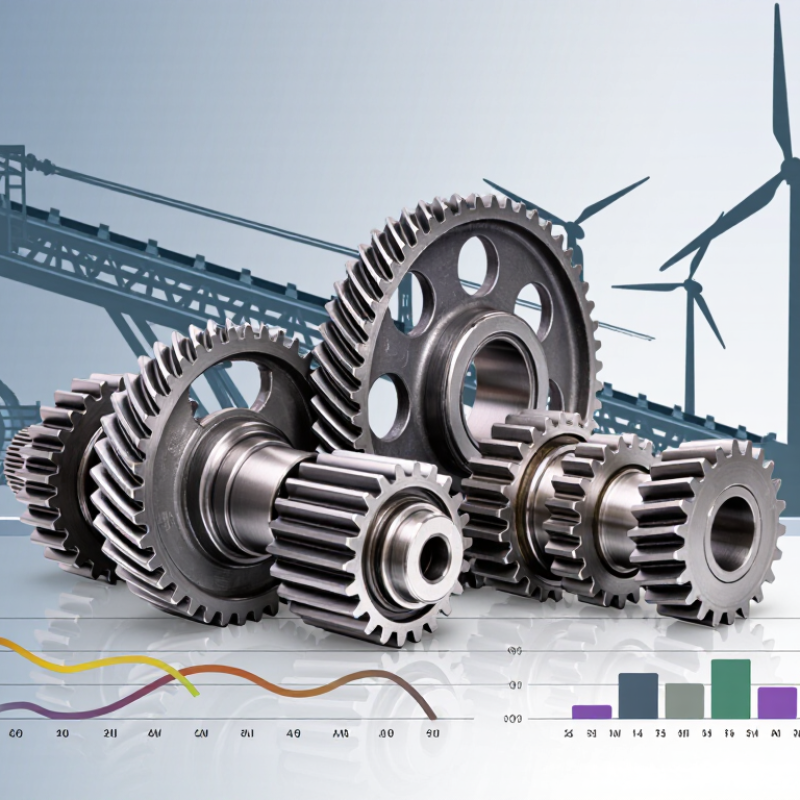
The 2026 Top Bevel Gear Manufacturers for Global Buyers guide examines suppliers shaping modern power transmission. Bevel Gear systems transfer motion between intersecting shafts. They support mining conveyors, wind turbines, agricultural equipment, robotics, and heavy industrial drives. Buyers now expect more than catalog availability. They need verified materials, controlled tooth geometry, traceable heat treatment, and dependable delivery.

Industry data shows why supplier selection matters. Mordor Intelligence estimates the industrial gearbox market will grow from approximately USD 28 billion in 2025 toward USD 38 billion by 2030. Its forecast indicates demand from automation, renewable energy, and manufacturing upgrades. Grand View Research also identifies industrial gearbox expansion as a continuing trend, especially in Asia-Pacific production. These reports cover broader gearbox categories, not bevel gears alone. Still, they reveal the commercial pressure surrounding this component.

Technical judgment remains essential. A supplier may advertise high torque capacity, yet the real test appears in noise levels, backlash, surface hardness, and service life. ISO 6336 calculations, material certificates, inspection records, and load-test evidence can expose meaningful differences. Production experience matters too. A well-machined spiral bevel gear should show consistent tooth contact, clean edges, and stable performance under changing loads. Some rankings simplify this reality. They should. But buyers must still question them. Factory audits, sample inspections, warranty terms, and regional support deserve equal attention. This guide compares leading manufacturers through those practical measures, helping global purchasers make more reliable decisions in 2026.
2026 Top Bevel Gear Manufacturers for Global Buyers

What Bevel Gears Are and Why Global Buyers Need Reliable Manufacturers

Bevel gears transfer motion between intersecting shafts, often at 90 degrees. Their conical teeth change speed, torque, and rotation direction inside compact machinery. Spiral bevel gears usually run more quietly than straight designs, but they demand accurate alignment. A small mounting error can create uneven tooth contact, heat, and premature wear. The U.S. Department of Energy’s Industrial Decarbonization Roadmap reports that motor-driven systems consume about 68% of industrial electricity. Efficient gearing therefore matters beyond mechanical performance. It can influence energy use, maintenance intervals, and production stability.

Global buyers need manufacturers that prove, not merely promise, consistency. Request material certificates, heat-treatment records, dimensional inspection data, and contact-pattern tests. ISO 6336 calculation methods can support rating checks for load capacity and service life. However, calculated life is not field reality. Dust, shock loads, poor lubrication, and operator habits can change results quickly. The International Energy Agency also identifies industrial efficiency as a major pathway for reducing energy demand, making drivetrain losses worth reviewing during procurement. A reliable supplier should discuss these operating conditions before quoting.

Tips: Share shaft angles, torque, speed, duty cycle, lubricant, ambient temperature, and expected service hours. Ask for sample inspection reports and traceability details. Do not judge quality by price alone. I once underestimated installation accuracy; the gear looked correct, yet the contact pattern exposed the weakness. That mistake remains useful.

2026 Top Bevel Gear Manufacturers for Global Buyers: What Bevel Gears Are and Why Reliable Manufacturing Matters

Bevel gears transmit motion between intersecting or offset shafts, commonly at right angles. The chart shows indicative single-stage transmission-efficiency ranges for major bevel gear types. Actual performance depends on tooth geometry, load, speed, lubrication, alignment, surface finish, and manufacturing accuracy.

Straight, spiral, and zerol bevel gears generally use intersecting shafts, while hypoid gears use offset shafts and typically experience more sliding, which can reduce efficiency and increase lubrication requirements. For global buyers, consistent heat treatment, dimensional inspection, material traceability, and documented quality control are essential when comparing manufacturers.

Key Factors for Evaluating Bevel Gear Manufacturers in 2026

Selecting bevel gear manufacturers in 2026 requires more than comparing prices. In practical sourcing work, I examine tooth accuracy, heat-treatment records, and material traceability. A polished website is not proof. Ask for inspection reports, dimensional tolerances, and recent production samples. Reliable manufacturers explain their testing methods clearly. They should also match gear geometry to load, speed, noise, and operating temperature. A supplier that asks detailed questions usually understands the application better than one offering instant quotations.

Production capacity matters, but consistency matters more. Review machining equipment, quality-control procedures, and corrective-action records. Check whether the manufacturer can maintain tolerances across small and repeated orders. Site audits or live video inspections can reveal storage conditions, calibration practices, and workflow discipline. Certifications may support credibility, yet they cannot replace technical evidence. I still find supplier comparisons imperfect because test conditions often differ. That weakness deserves careful discussion before approval.

Tips: Request a sample gear and inspect backlash, surface finish, and tooth contact. Confirm packaging, lead times, warranty terms, and communication channels in writing. Ask how rejected parts are identified and replaced. Do not rely on one impressive prototype. Long-term reliability appears through repeat batches, documented feedback, and transparent problem handling. Pricing should be evaluated beside service life, not alone.

2026 Top Bevel Gear Manufacturers for Global Buyers - Key Factors for Evaluating Bevel Gear Manufacturers in 2026

Evaluation Dimension Recommended Buyer Benchmark Relevant Technical Reference or Practice Evidence to Request Priority
Bevel gear type and application fit Demonstrated capability for straight, spiral, hypoid, or zerol bevel gears matching the required speed, torque, shaft angle, noise, and duty cycle. Application-specific gear geometry, load analysis, lubrication, and thermal evaluation. Technical proposal, load calculations, gear drawings, application references, and design review records. Critical
Accuracy and tooth quality The supplier should state the achievable accuracy class and inspection method for each gear size and production volume. Tighter accuracy should be specified for low-noise or high-speed applications. ISO 17485 for bevel gear accuracy; AGMA 2009 for bevel gear classification, tolerances, and measurement methods. Inspection reports showing pitch, runout, tooth contact, flank deviation, and backlash results. Critical
Material selection Material grade, cleanliness, hardenability, and mechanical properties must be matched to torque, shock loading, wear, corrosion exposure, and operating temperature. Common gear materials include carburizing steels such as 18CrNiMo7-6, 20MnCr5, and AISI 8620, subject to engineering validation. Material certificates, chemical composition, heat number, mechanical test results, and approved material specifications. Critical
Heat treatment control Documented carburizing, quenching, tempering, or nitriding processes with controlled case depth, hardness, distortion, and core properties. For carburized gears, a surface hardness around 58–62 HRC is commonly specified, but the actual target must be defined by the design and material. Hardness maps, case-depth measurements, microstructure reports, furnace charts, and distortion records. Critical
Manufacturing process capability Integrated control of forging or bar stock, gear cutting, heat treatment, grinding or lapping, deburring, cleaning, and final assembly. Closed-loop process control and capability studies for critical characteristics. Process flow chart, PFMEA, control plan, machine list, capability data, and sample first-article records. High
Inspection and metrology Measurement equipment must be calibrated and suitable for gear geometry, tooth contact, concentricity, surface finish, and dimensional verification. Coordinate measuring machines, gear measuring centers, hardness testers, surface roughness testers, and calibrated gauges. Calibration certificates, measurement uncertainty information, control charts, and complete dimensional reports. Critical
Non-destructive testing Inspection coverage should reflect the application risk, with special attention to cracks, laps, quench defects, and grinding damage. Magnetic particle testing is commonly used for ferromagnetic gears; ultrasonic testing may be used for suitable sizes and geometries. NDT procedures, operator qualifications, acceptance criteria, and batch inspection reports. High
Noise, vibration, and tooth contact Stable tooth contact pattern, controlled backlash, low transmission error, and acceptable noise and vibration under representative load conditions. Contact-pattern testing, loaded testing, vibration analysis, and application-specific acceptance limits. Test plans, contact marking images, vibration data, noise measurements, and corrective-action history. High
Prototype and validation support Ability to provide engineering review, prototypes, first-article inspection, durability testing, and design changes before mass production. Stage-gate validation covering design, process, dimensional, functional, and endurance requirements. Prototype schedule, validation matrix, test reports, sample approval process, and engineering change procedure. High
Production capacity and scalability Capacity should cover prototype, low-volume, and serial-production requirements without weakening inspection or traceability controls. Capacity planning should include machine availability, heat-treatment throughput, inspection resources, and contingency arrangements. Monthly capacity statement, lead-time history, bottleneck analysis, capacity expansion plan, and business continuity plan. High
Quality management system A documented quality system with corrective action, supplier control, internal audits, nonconformance management, and continuous improvement. ISO 9001 certification is a widely used baseline; automotive projects may require additional sector-specific requirements. Valid certificate, audit summary, defect-rate data, corrective-action records, and quality KPI trends. Critical
Traceability and documentation Each production lot should be traceable from raw material through machining, heat treatment, inspection, packaging, and shipment. Lot-based identification, revision control, digital records, and retention periods defined by contract or regulation. Part marking examples, batch records, certificates of conformity, inspection plans, and document-retention policy. High
Export compliance and sustainability The supplier should support destination-market documentation, restricted-substance declarations, responsible material sourcing, and applicable environmental requirements. REACH and RoHS requirements may apply depending on product use and destination; environmental obligations should be confirmed contractually. Compliance declarations, safety data where applicable, packaging specifications, environmental certificates, and country-of-origin documents. Medium
Commercial terms and total cost Compare tooling, unit price, inspection, packaging, freight, duties, payment terms, warranty, and the cost of potential field failures. Total cost of ownership is more meaningful than unit price alone for precision bevel gears. Itemized quotation, tooling ownership terms, Incoterms, warranty conditions, delivery history, and cost-reduction proposals. High
After-sales engineering and warranty Defined response times for technical issues, root-cause analysis, replacement parts, warranty claims, and corrective actions. Formal 8D or equivalent problem-solving process with controlled engineering changes. Warranty policy, service-level agreement, escalation contacts, failure-analysis examples, and spare-parts plan. Medium
Buyer scoring note: For a practical 2026 supplier evaluation, assign the greatest weight to application fit, accuracy, material and heat-treatment control, inspection capability, traceability, and proven quality performance. Technical benchmarks should always be confirmed against the final drawing, duty cycle, applicable standard, and contractual acceptance criteria.

Leading Bevel Gear Manufacturers and Their Product Strengths

2026 Top Bevel Gear Manufacturers for Global Buyers

Leading bevel gear manufacturers distinguish themselves through repeatable engineering, not attractive catalogs alone. Experienced producers use CNC cutting, controlled heat treatment, and precision grinding to improve tooth contact. Their product strengths often include spiral bevel gears, straight bevel gears, and custom assemblies for industrial drives. Each option suits different loads, speeds, noise limits, and installation spaces.

Reliable manufacturers provide measurable data. Buyers should review torque ratings, transmission efficiency, backlash ranges, material grades, and inspection methods. Strong suppliers also offer dimensional reports, hardness records, and batch traceability. These details help engineers compare products across regions and reduce installation surprises. Practical support matters too. Application teams can check shaft alignment, lubrication, mounting direction, and expected service cycles before production begins.

Real performance is less perfect than a product page suggests. A gear may meet its rating but still run noisily when alignment is poor. That is why experienced manufacturers test sample sets under controlled loads and investigate abnormal wear. Still, testing cannot replace field feedback. Buyers should ask for references from similar machinery, clear tolerance limits, and realistic lead times. Flexible suppliers can adjust tooth geometry, bore sizes, coatings, and packaging for demanding export conditions. Small omissions remain possible. Careful technical review protects the purchase.

Manufacturing Technologies, Quality Standards, and Customization Options

For global buyers in 2026, bevel gear selection should begin with manufacturing evidence, not catalog claims. Modern producers use CNC cutting, robotic heat treatment, and coordinate measuring machines. These technologies improve tooth accuracy and repeatability. Still, process control matters more than impressive equipment. Ask for material certificates, heat-treatment charts, and recent inspection records. A supplier should explain how it controls tooth contact, backlash, runout, and surface hardness.

Quality standards provide a useful common language. ISO 9001 supports documented production and corrective actions. AGMA and DIN references help define gear accuracy, geometry, and testing methods. Buyers should confirm which standard applies to each drawing. A clear inspection report may include pitch error, profile deviation, hardness readings, and noise-test results. Small details matter. A 0.02-millimeter variation can affect vibration in a high-speed gearbox. Sampling alone may not reveal every risk, especially during a new production run.

Customization should cover more than gear size. Engineers may request stainless or alloy steel, modified pressure angles, special tooth profiles, corrosion-resistant finishes, or matched gear pairs. Shaft dimensions and mounting tolerances also need careful review. Effective suppliers use prototype testing before full production. No inspection plan is perfect. I would still request a first-article report and retain sample parts for comparison. Clear drawings, traceability, and realistic delivery data make technical cooperation more reliable. The strongest manufacturer is not always the cheapest. It is the one that can explain limitations without hiding them.

How to Select the Right Bevel Gear Supplier for Your Application

2026 Top Bevel Gear Manufacturers for Global Buyers

How to Select the Right Bevel Gear Supplier for Your Application

Selecting a bevel gear supplier starts with the machine, not the catalog. Define torque, speed, gear ratio, shaft arrangement, operating temperature, and expected service hours. A supplier should explain how each specification affects tooth strength, noise, heat, and lifespan. Ask for load calculations, material grades, heat-treatment details, and dimensional tolerances. Vague answers deserve caution.

Look closely at manufacturing evidence. Reliable suppliers can provide inspection reports, tooth-contact records, hardness results, and traceability documents. Request a sample or pilot batch before approving large quantities. Check whether the supplier measures runout, backlash, surface finish, and mounting accuracy. Small errors matter. A gear may fit the drawing but still create vibration after assembly.

Communication also reveals technical maturity. Engineers should discuss lubrication, installation alignment, housing stiffness, and real operating conditions. Delivery capacity matters, but rushed production can weaken consistency. A polished website proves little. In practical evaluations, buyers sometimes focus on price and overlook testing costs, replacement delays, or unsuitable materials. That judgment can be expensive. Ask how design changes are controlled and how complaints are investigated. No supplier is perfect, and even a strong process may need correction after field feedback. Choose the partner that documents problems, responds clearly, and improves the design with measurable evidence.