Top 10 Timing Belt Tips Every Car Owner Must Know for Longevity
The timing belt is a crucial component of a vehicle's engine, playing a vital role in ensuring that the engine's valves open and close at the proper times during each cylinder's intake and exhaust strokes. For car owners, understanding the significance of the timing belt can lead to better maintenance practices, safeguarding the longevity and performance of their vehicles. This often-overlooked part can lead to catastrophic engine failure if not properly maintained, making it essential for every vehicle owner to be informed about its care and replacement.
In this article, we will explore the top 10 timing belt tips every car owner must know. From recognizing the signs of wear to understanding the recommended replacement intervals, these insights will empower car owners to take informed actions that extend the life of their timing belts. By being proactive about timing belt maintenance, vehicle owners can avoid unexpected repairs and ensure their engines run smoothly for years to come. Emphasizing the importance of regular checks and education on this vital component will ultimately lead to a more reliable driving experience.
Understanding Timing Belts: Composition, Function, and Lifespan
Timing belts are a crucial component in the engine of a vehicle, playing an essential role in maintaining the precise synchronization between the crankshaft and the camshaft. Typically made from reinforced rubber or a polymer blend, timing belts help in guiding the movements of different engine parts, ensuring that the engine runs smoothly and efficiently. Over time, these belts can wear down due to exposure to heat and friction, leading to potential engine damage if not replaced according to recommended maintenance schedules.
The lifespan of a timing belt varies based on factors such as driving conditions and manufacturer specifications, often ranging from 60,000 to 100,000 miles. However, it's important for car owners to pay close attention to any signs of wear, including cracks or fraying, which can indicate the need for timely replacement.
Regular inspections and adhering to the recommended replacement intervals not only enhance the longevity of the timing belt but also promote overall engine health, ultimately protecting the vehicle's performance and reducing the risk of costly repairs. Taking proactive steps in understanding the composition, function, and lifespan of timing belts is vital for any car owner looking to prolong the life of their engine.
Critical Signs of Timing Belt Wear: How to Identify Potential Issues
The timing belt is a crucial component in your vehicle’s engine, responsible for synchronizing the rotation of the crankshaft and camshaft. Recognizing the critical signs of timing belt wear is essential for maintaining your vehicle's performance and preventing costly repairs. According to a study by the Engine Builders Association, approximately 90% of timing belt failures occur due to lack of maintenance or neglecting warning signs.
One of the primary indicators of timing belt wear is visual fraying or cracking. If you inspect your timing belt and notice any signs of deterioration, it’s time to replace it. Additionally, unusual engine noises—such as a ticking or slapping sound—may indicate that the timing belt is not functioning properly. Regularly checking the belt tension can also prevent it from becoming too loose or too tight, which can lead to severe engine issues down the line.
For longevity, consider these tips: First, adhere to your vehicle's manufacturer recommendations regarding timing belt replacement intervals, typically between 60,000 to 100,000 miles, depending on your engine type. Second, keep an ear out for unusual sounds during engine operation, as these could be early warnings of timing belt problems. Finally, conduct routine visual inspections and ensure that all associated components, such as pulleys and water pumps, are also in good condition to avoid future complications. Following these guidelines can help extend the life of your timing belt and keep your engine running smoothly.
Optimal Replacement Intervals: Industry Standards and Recommendations
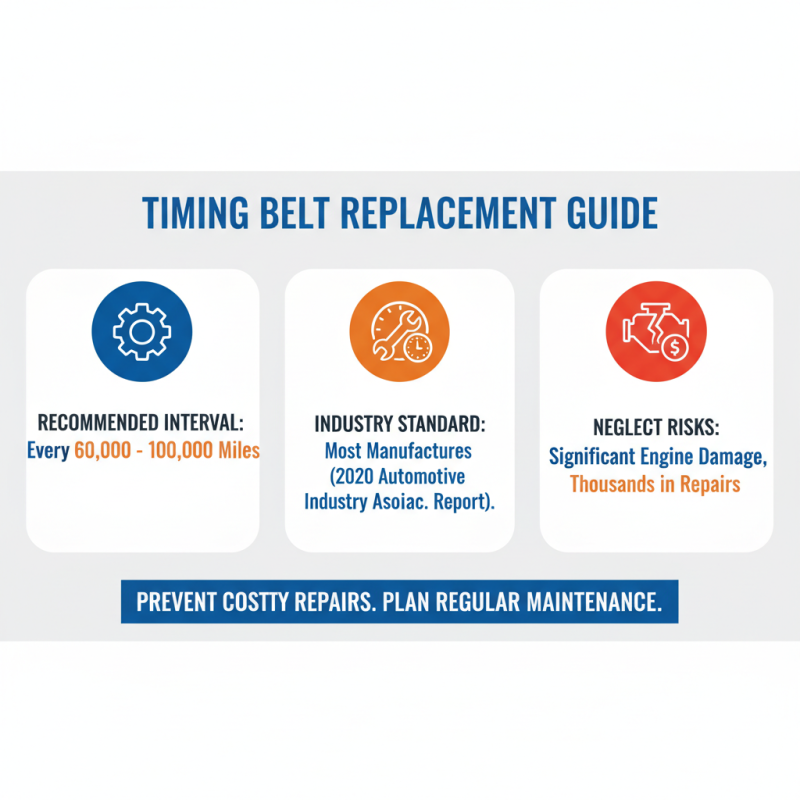
When it comes to managing your vehicle's timing belt, understanding the optimal replacement intervals is crucial for ensuring longevity and preventing costly repairs. According to industry standards, most manufacturers recommend replacing the timing belt every 60,000 to 100,000 miles. A 2020 report from the Automotive Industry Association highlighted that neglecting these recommendations can lead to significant engine damage, which may result in repair bills reaching into the thousands. This underscores the importance of adhering to these intervals and planning regular maintenance checks.
Additionally, factors such as driving conditions and engine type can impact timing belt wear. For instance, vehicles frequently driven in extreme temperatures or stop-and-go traffic may require earlier replacements. The Car Care Council advises that car owners consult their vehicle’s owner manual or a certified technician for specific guidance tailored to their driving habits and vehicle model. With proactive checks and timely replacements, car owners can enhance the lifespan of their timing belts and maintain the overall health of their engines.
Importance of Choosing Quality Parts: OEM vs. Aftermarket Timing Belts
When it comes to replacing your car's timing belt, choosing the right parts is crucial for ensuring the longevity and performance of your vehicle. The decision between OEM (Original Equipment Manufacturer) and aftermarket timing belts can significantly impact the lifespan of your engine. According to industry reports, OEM parts are often engineered with the specific tolerances and material specifications of your vehicle’s manufacturer in mind. These belts typically undergo rigorous testing and quality control processes, leading to a more reliable performance.
On the other hand, aftermarket timing belts can offer cost advantages, but the quality can vary widely. A recent study found that approximately 30% of aftermarket parts do not meet the same standards as OEM components, which might result in premature failures or decreased efficiency. For example, inferior materials can lead to faster wear and tear, potentially putting your engine at risk. Car owners should ensure that any aftermarket parts they consider are backed by reputable certifications and reviews to mitigate risks associated with lower-quality components.
The longevity of your timing belt also depends on factors like driving habits and maintenance schedules. However, even the best-maintained engines can suffer from poor-quality parts. Selecting between OEM and aftermarket options should thus be a well-informed decision, considering both the short-term cost savings and the long-term implications on vehicle performance and maintenance.
Top 10 Timing Belt Tips Every Car Owner Must Know for Longevity
| Tip |
Description |
Frequency of Inspection |
Recommendation |
| 1. Regular Inspection |
Check for visible wear and tear. |
Every 20,000 miles |
Perform visual checks more frequently as you near replacement. |
| 2. Follow Manufacturer's Recommendations |
Adhere to the replacement schedule in the owner’s manual. |
Per owner's manual |
Stick to prescribed intervals. |
| 3. Quality of Parts |
Use OEM parts for reliability and longevity. |
N/A |
Invest in high-quality timing belts. |
| 4. Replace Tensioners |
Always replace tensioners during timing belt change. |
With timing belt replacement |
Do not overlook tensioners. |
| 5. Avoid Overloading Engine |
High load can stress the timing belt. |
N/A |
Drive within the vehicle’s limits. |
| 6. Monitor Engine Temperature |
Engine overheating can cause belt failure. |
Continuously |
Fix cooling issues promptly. |
| 7. Listen for Unusual Noises |
Squeaking or grinding sounds might indicate issues. |
Immediately |
Investigate any strange sounds. |
| 8. Professional Installation |
Have the timing belt installed by a qualified technician. |
With every replacement |
Ensure correct installation for longevity. |
| 9. Inspect Other Components |
Check other related components for wear. |
With belt inspection |
Replace as needed to avoid future issues. |
| 10. Document Maintenance |
Keep records of all timing belt services. |
N/A |
Helps in tracking maintenance schedule. |
Routine Maintenance Practices: Tips to Enhance Timing Belt Longevity
To ensure the longevity of your timing belt, routine maintenance is essential. Regular checks can prevent costly engine damage and extend the life of this crucial component. One key practice is to follow your vehicle’s service schedule closely. Consult your owner’s manual to determine when the timing belt should be inspected or replaced. Keeping an eye on these intervals allows for timely interventions and avoids unexpected failures.
Another vital tip is to maintain the proper tension. A belt that is too loose can slip, while one that is too tight can cause undue stress on the engine components. During maintenance, have a professional inspect the belt tension and adjust it as necessary. Additionally, keep an eye on the condition of surrounding parts like the water pump and pulleys, as deterioration in these components can affect the timing belt’s performance.
Lastly, listen for unusual sounds while driving. If you hear squeaking or grinding noises, it may be a sign that the timing belt or its associated components need attention. Addressing these sounds early can save you from more significant issues down the line. Consistent attention to these routine maintenance practices will significantly enhance the longevity of your timing belt, ensuring your vehicle runs smoothly for years to come.
Top 10 Timing Belt Tips for Longevity