How to Choose the Best Flat Rubber Belts?
Choosing the best Flat Rubber Belts is not simply a matter of selecting the thickest or strongest option. Belt performance depends on the conveyor design, transported material, operating speed, temperature, tension, and pulley diameter.
As rubber conveyor specialist Dr. David J. Williams explains, “The right belt is chosen by duty, not appearance.” This principle remains practical on the factory floor. A belt carrying sharp stone needs different protection from one moving lightweight packages. Oil exposure also changes the decision. A belt that performs well in a dry warehouse may soften, swell, or lose grip near lubricants.
Look closely at the working conditions.
Measure the belt width and length accurately. Check the pulley surface, splice design, and available take-up distance. Small mistakes can create tracking problems, edge wear, or premature cracking. For example, a belt running over a pulley that is too small may flex sharply at every revolution. That repeated stress is easy to overlook.
Material quality matters, but it is not the entire story. Natural rubber may offer strong elasticity, while synthetic compounds can provide better resistance to oil, heat, abrasion, or weather. The best choice balances service life and total operating cost.
No selection method is perfect. Real equipment can behave differently from a specification sheet. Dust, uneven loading, and poor alignment may reduce performance unexpectedly. Therefore, this guide examines Flat Rubber Belts through practical criteria, technical evidence, and common installation mistakes, helping buyers make a more dependable choice.
Understanding the Basic Structure and Uses of Flat Rubber Belts
How to Choose the Best Flat Rubber Belts?
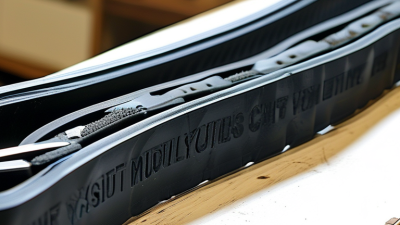
Flat rubber belts have a simple structure: a rubber outer layer surrounds fabric, polymer, or reinforced textile plies. The cover provides grip and protects against abrasion. The inner plies carry tension and control stretching. In a workshop, this difference appears clearly. A weak belt lengthens near the pulley and starts to wander.
Choose the belt after checking load, speed, pulley diameter, temperature, and contact materials. A belt carrying dusty cartons needs different cover resistance than one moving damp food packaging. ISO 4184 provides dimensional guidance for power transmission belts, while ISO 1813 addresses antistatic properties. These standards support safer selection, but they do not replace testing under real operating conditions. That part is often underestimated.
Industry data also shows why belt selection matters. Grand View Research estimated the global conveyor belt market above USD 4 billion in 2023, with continued growth through 2030. A 2024 MarketsandMarkets report projected steady expansion in conveyor systems, driven by warehouses, mining, and manufacturing. These reports describe broad markets, not every flat rubber belt. Their figures should be treated as direction, not certainty. Check tensile strength, hardness, joining method, and surface profile before ordering. Measure twice. Field conditions can still prove the specification incomplete.
Matching Rubber Materials to Temperature, Load, and Environment
Choosing the best flat rubber belt starts with the operating environment, not belt color or surface texture. Measure the actual temperature near the pulley and product zone. Short heat spikes can matter more than the average reading. ISO 4195-1 defines heat-resistance classes up to 180°C for rubber conveyor covers, but flat belts require manufacturer-specific validation. Do not copy conveyor ratings blindly.
For moderate heat, natural rubber can provide strong grip and flexibility. Nitrile rubber suits oily environments and commonly operates around -30°C to 100°C, depending on formulation. EPDM handles weather, steam, and ozone well, often across approximately -50°C to 150°C. Silicone tolerates wider temperature swings, but its tear resistance may disappoint under sharp, repeated loading. Load changes everything. A narrow belt carrying a heavy part can stretch, slip, or fatigue at the splice.
Test evidence matters.
ASTM D412 evaluates tensile strength and elongation, while ASTM D573 measures heat aging in air. Ask for retention data after aging, not only initial strength. The International Rubber Study Group’s 2024 outlook places global rubber demand in the tens of millions of tonnes, yet raw material volume says little about belt performance. I have seen belts selected by temperature alone fail because oil softened the cover or pulley tension was excessive. That assumption needs challenging. Consider humidity, chemicals, dust, pulley diameter, speed, and cleaning methods before approving the compound.
How to Choose the Best Flat Rubber Belts?
Match the rubber material to the operating temperature, load, and surrounding environment. The chart shows typical continuous-service temperature ranges for common elastomer families; actual belt performance depends on compound formulation, belt construction, speed, tension, and exposure conditions.
Selection guide: NR and SBR are suitable for general-purpose, dry applications with moderate temperatures. NBR is a stronger choice where mineral oils or fuels are present. EPDM performs well with weathering, ozone, water, and steam. Silicone handles very wide temperature swings but is generally selected for lighter loads. FKM provides strong resistance to oils and chemicals at elevated temperatures, but it is usually reserved for demanding environments.
Comparing Belt Surface Designs, Joining Methods, and Drive Compatibility
How to Choose the Best Flat Rubber Belts?
A belt surface should match the material and motion, not merely look durable. Smooth surfaces suit clean, steady conveying and are easier to wipe. Patterned surfaces can improve grip when products are damp or inclined. However, deep textures may collect dust or mark soft goods. Keep it practical. I have seen operators choose aggressive patterns, then struggle with cleaning and tracking.
The joining method affects installation time, strength, and pulley performance. Endless vulcanized belts provide a smooth joint and usually pass over small pulleys better. Finger splices offer flexibility and can reduce bending stress. Mechanical fasteners allow quick repairs, but they may create noise or leave marks on sensitive products. The correct choice depends on belt thickness, load, temperature, and available tools. A rushed splice can fail even when the rubber compound is suitable.
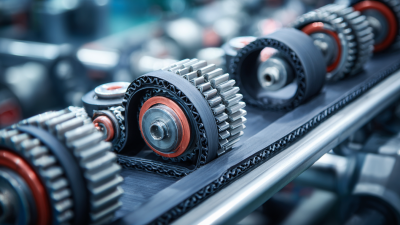
Drive compatibility deserves careful measurement. Check pulley diameter, shaft speed, belt tension, and the available tracking system. A crowned pulley may help a flat belt stay centered, but excessive crown can distort thin belts. Friction drives need enough contact and controlled tension. Toothed designs require matching profiles and accurate alignment. Test the belt under real conditions, including startup loads and product accumulation. Small details matter. My own preference is to confirm dimensions on the machine, not only from drawings. Drawings can be outdated. A short trial often reveals vibration, edge wear, or unexpected slipping before full installation.
Evaluating Durability, Maintenance Needs, and Total Purchase Value
How to Choose the Best Flat Rubber Belts?
Durability should match the working environment, not just the machine’s load rating. Check tensile strength, abrasion resistance, operating temperature, and resistance to oil or moisture. A belt carrying sharp boxes needs a tougher surface than one moving clean, light packages. Measure pulley diameter carefully. A belt that bends around a pulley below its recommended limit may crack early. In practical maintenance work, small alignment errors often cause more damage than heavy loads.
Maintenance needs affect the real purchase value. Inspect the belt weekly in dusty or high-speed applications. Look for edge fraying, surface cuts, glazing, and uneven stretching. Correct tracking early. It can prevent costly pulley damage and unexpected downtime. However, inspection schedules should reflect actual conditions. A quiet indoor line may need less attention, while a wet outdoor conveyor demands more frequent checks. I would not assume a thicker belt always lasts longer. It may increase energy use or create poor tracking.
Tips:
Compare the full ownership cost, not only the invoice price. Include installation labor, tensioning tools, spare-belt storage, energy consumption, and replacement intervals. Ask for test data that reflects your operating temperature and load. Record the date, belt length, and failure location after every replacement. These details reveal patterns that guesswork misses. A cheaper belt can become expensive after two unplanned shutdowns. A premium option may also disappoint if the pulley design is unsuitable. Check the complete system.