What is Bevel Gear and How Does It Work?
Bevel gears are a crucial component in mechanical systems that require the transfer of power between non-parallel shafts. They allow for smooth changes in direction, making them essential in various applications. According to industry reports, the bevel gear market is projected to grow significantly, reaching a value of over $20 billion by 2025. This increase highlights the rising demand for precision machinery in sectors such as automotive and industrial engineering.
These gears come in different types, each suited for specific tasks. The most common types are straight bevel, spiral bevel, and zerol bevel gears. Each type offers unique advantages in efficiency and load capacity. However, the complexity in their design can pose challenges. Proper manufacturing and alignment are critical for optimal performance. Any deviation can lead to premature wear or mechanical failure.
Understanding how bevel gears work is vital for engineers and manufacturers. It ensures effective power transmission and enhances overall system reliability. As the industry evolves, continuous innovation in gear technology is necessary. Engineers must stay informed about new materials and designs. This will ensure their projects are both efficient and cost-effective. By exploring bevel gears more deeply, we can appreciate their significance in modern machinery.
What is Bevel Gear?
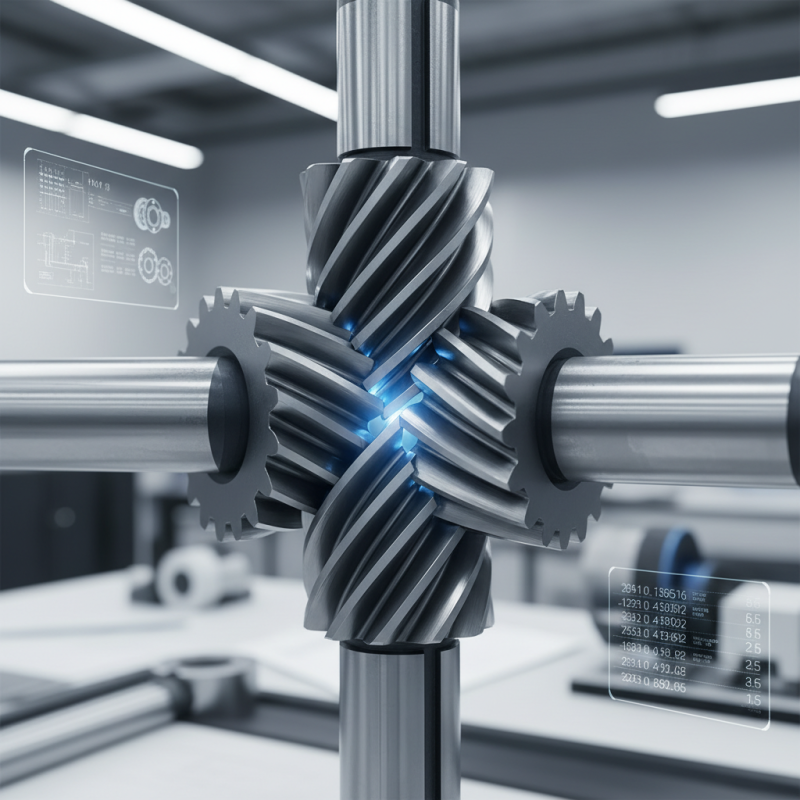
Bevel gears are vital components in machinery, allowing for changes in the direction of rotational movement. These gears are typically mounted at a 90-degree angle. Their unique design enables efficient power transmission in various applications, from automotive systems to industrial equipment. According to a recent market analysis by Global Industry Analysts, the bevel gear market is expected to reach $12 billion by 2027, highlighting their integral role in engineering.
One of the key advantages of bevel gears is their compact design. They can effectively transmit power between shafts that do not align directionally. This makes them ideal for complex machinery setups. However, the manufacturing process requires precision. Even slight deviations in gear dimensions can lead to performance issues. Regular maintenance is crucial for ensuring longevity.
Tips: Always check for wear and tear. Regularly lubricate your bevel gears to prevent friction. Performing these simple checks can extend the lifespan of your equipment. Note that over-lubrication can cause buildup and affect efficiency. It's a balance that requires attention. Understanding these details contributes to more robust machinery performance.
Types of Bevel Gears and Their Applications
Bevel gears play a vital role in mechanical systems for transferring motion at various angles. There are several types of bevel gears, each serving unique applications. The most common types include straight bevel, spiral bevel, and hypoid gears.
Straight bevel gears have teeth that are straight and inclined to the axis. They are often used in lighter applications. On the other hand, spiral bevel gears feature oblique teeth, allowing for smoother operation and greater load capacity. This makes them suitable for heavier machinery.
Hypoid gears, which can handle large angular offsets, are prevalent in automotive applications due to their efficiency and quiet operation.
Tips: When selecting bevel gears, consider the load requirements. Ensure the gear type matches the application's specific needs. Pay attention to the gear alignment as misalignment can lead to wear and failures. Always check the mounting conditions, as this can impact performance.
Principle of Operation for Bevel Gears
Bevel gears are essential components in machinery. They facilitate the transfer of power between shafts that are set at an angle, typically 90 degrees. The unique shape of bevel gears allows them to change the direction of rotation. This feature is crucial in applications where space constraints exist.
The principle of operation for bevel gears revolves around their conical shape. When one gear rotates, it engages with another at an angle. The teeth of the gears mesh smoothly, enabling effective power transmission. A critical factor in their functioning is the correct alignment of the gears. Any misalignment can lead to increased wear and reduced efficiency.
Moreover, the type of tooth design, whether straight or spiral, influences performance. Spiral bevel gears provide smoother engagement and are quieter, but they are more complex to manufacture. Observations on gear performance reveal areas for improvement. Engineers often face challenges in minimizing backlash and enhancing durability. Such reflections pave the way for the development of better gear solutions in the future.
Advantages of Using Bevel Gears in Machinery
Bevel gears are essential components in many machines. They efficiently transfer power between shafts that intersect at an angle. One major advantage of using bevel gears is their ability to change the direction of rotation. This feature is particularly useful in compact machinery, where space is limited. Bevel gears make it possible to design machines that fit into tighter spaces while still maintaining power transmission efficiency.
Another advantage is their adaptability to various loads and speeds. Bevel gears can handle high torque, making them suitable for heavy-duty applications. They can also operate smoothly at different speeds, which improves machine performance. Additionally, the angled design of bevel gears reduces wear and tear, extending the lifespan of the machinery. However, ensuring the correct alignment during installation can be challenging. Misalignment may lead to increased friction and premature failure.
The cost-effectiveness of bevel gears is also noteworthy. They often require less material than other gear types, making them a lighter option. This can reduce manufacturing costs and energy consumption over time. However, irregular maintenance may cause unforeseen issues, such as noise or vibration, which can impact overall efficiency. Thus, while bevel gears offer significant benefits, attention to detail in their use and maintenance remains critical.
Common Uses and Industries Utilizing Bevel Gears
Bevel gears are crucial components in various machines and vehicles, enabling smooth transfers of motion and power. They are commonly used in applications where shafts need to intersect at angles, often 90 degrees. Industries such as automotive, aerospace, and manufacturing rely heavily on bevel gears for their efficient operations.
In automotive applications, bevel gears are often found in differentials. They help distribute power to the wheels, allowing for better traction and control. In aerospace, they assist in the operation of various systems, from landing gear mechanisms to control surfaces. Manufacturing machinery also utilizes bevel gears for precise motion control, enhancing overall productivity.
**Tip:** When selecting bevel gears, consider the load requirements. Underestimating the load can lead to premature wear and failure.
Another key use of bevel gears is in robotics. They facilitate complex movements in robotic arms, providing flexibility and strength. This adaptability is vital for precision tasks. Sometimes, the choice of bevel gear might not seem optimal at first glance. Reevaluating the design can often lead to improved performance.
**Tip:** Regular maintenance of bevel gear systems can prevent costly downtimes. Check for any signs of wear frequently.
Bevel gears play an integral role in various sectors. Each industry may have unique challenges and requirements, emphasizing the need for a tailored approach to gear selection. Understanding these nuances enhances machinery performance and reliability.