Best Ribbed Belt Options for Your Machinery Needs?
When it comes to machinery, the significance of choosing the right Ribbed Belt cannot be overstated. According to a report by Grand View Research, the global automotive belt market is projected to reach over $25 billion by 2025. This growth underscores the increasing dependency on high-quality drive belts in various industries. Ribbed Belts, often praised for their superior grip and efficient power transfer, play a crucial role in ensuring machinery operates smoothly.
Choosing the appropriate Ribbed Belt can impact not just performance but also durability. Inconsistent quality can lead to premature wear and costly downtime. A study from the International Journal of Engineering Research highlights that nearly 20% of machinery failures are attributed to belt-related issues. Thus, investing in reliable options is essential for optimal operations. The challenge lies in selecting from a multitude of choices available in the market, each claiming superiority.
Professional insight is vital when assessing your needs. Understand what works best for your specific machinery applications. Check for compatibility and manufacturer recommendations. Remember, a Ribbed Belt that fits perfectly enhances efficiency and reduces operational risks. Striking the right balance between cost and quality ensures both performance and longevity in your machinery.
Understanding Ribbed Belts and Their Applications in Machinery
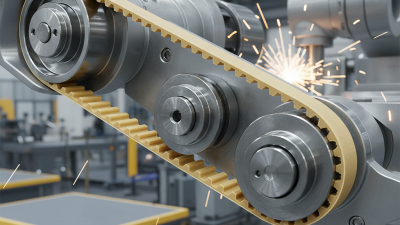
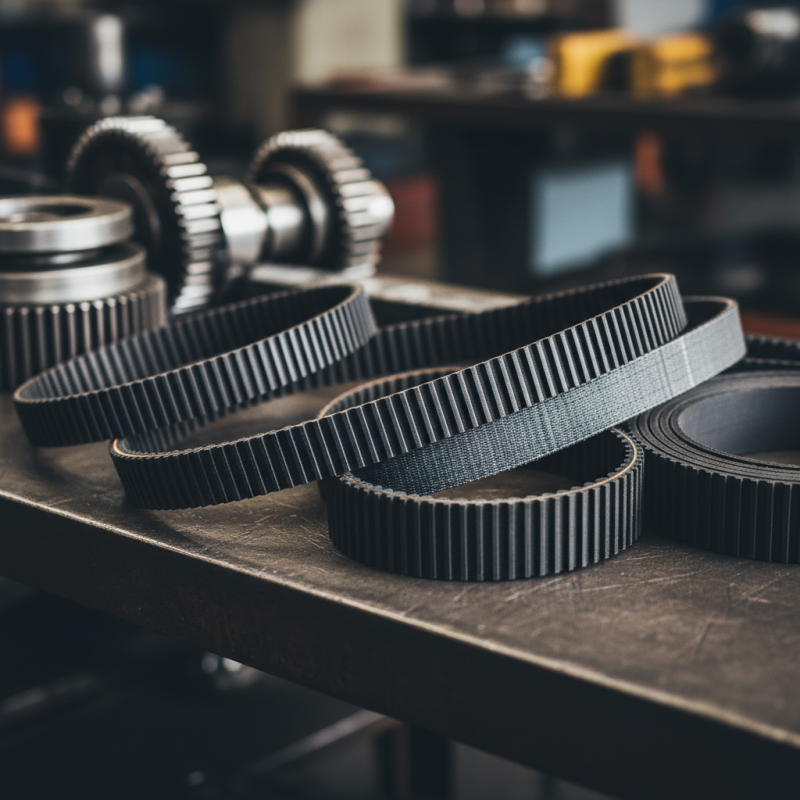
Ribbed belts, also known as serpentine belts, play a crucial role in machinery. They are designed to transfer power efficiently between components like pulleys and gears. These belts are often made of rubber or synthetic materials that provide flexibility and strength. Their ribbed design increases surface area contact, reducing slippage and enhancing performance.
Recent industry studies reveal that ribbed belts can improve energy efficiency by up to 15%. This feature is particularly important in manufacturing environments where power consumption directly affects operational costs. Additionally, ribbed belts can endure extreme temperatures and stresses, making them reliable for heavy-duty applications. However, wear and tear can impact their performance, leading to unexpected downtime.
Choosing the right ribbed belt is essential. Factors like load capacity, operational speed, and environmental conditions must be assessed. Misalignments or improper tension can result in premature failures. Regular inspections and maintenance are essential for optimal performance. A proactive approach can help prevent costly repairs and extend the life of the machinery.
Types of Ribbed Belts: A Comprehensive Overview
Ribbed belts, often considered essential in machinery, come in various types, each suitable for specific applications. Their ribbed design enhances grip, reduces slippage, and improves efficiency. According to industry reports, ribbed belts can increase drive efficiency by up to 95%, which is crucial for high-performance machinery.
There are several categories of ribbed belts. Classic V-belts, often used in traditional systems, provide basic functionality. They often fall short in power transmission. On the other hand, the serpentine belt design allows for multiple accessory drives with one belt. This versatility makes them popular in modern automotive applications and industrial machines. A recent analysis indicated that serpentine belts account for nearly 60% of the belt market due to their reliability and efficiency.
Timing belts, a specialized type of ribbed belt, ensure precise timing in engines. Their failure can lead to significant damage and costly repairs. Statistics show that improper maintenance can lead to a 50% increase in the risk of failure. Regular inspections are essential. Each type of ribbed belt has its merits and drawbacks. Understanding these variations helps machine operators make informed decisions based on their specific needs.
Best Ribbed Belt Options for Your Machinery Needs
| Belt Type |
Material |
Width (mm) |
Length (mm) |
Temperature Range (°C) |
Applications |
| Ribbed V-Belt |
Rubber |
20 |
1300 |
-30 to 80 |
Industrial machinery, HVAC systems |
| Poly V-Belt |
Polyester |
15 |
1000 |
-20 to 70 |
Automotive, light-duty machinery |
| Notched Ribbed Belt |
Rubber |
25 |
1500 |
-20 to 75 |
Agricultural machinery, conveyors |
| Hexagonal Belt |
Rubber |
30 |
1200 |
-40 to 90 |
Heavy machinery, construction |
| Ribbed Flat Belt |
Nylon |
40 |
1100 |
-10 to 60 |
Textile machinery, packaging |
Key Factors to Consider When Selecting Ribbed Belts
Selecting the right ribbed belt for machinery needs requires careful consideration of several factors. Material composition plays a crucial role. Most ribbed belts are made from rubber or synthetic materials, which affect their durability and performance. According to industry reports, a belt made from high-quality EPDM (ethylene propylene diene monomer) can last up to 50% longer than traditional rubber variants.
Another important consideration is the belt's width and length. These measurements directly affect how well the belt fits on pulleys. A poorly fitting belt can lead to slippage and inefficiency. Data indicates that a belt that is 5mm wider can increase power transmission efficiency by as much as 15%. Matching the correct dimensions is critical for optimal performance.
Additionally, consider the load capacity and operating temperature range. Different machines require belts with specific load tolerances. Operating outside these parameters can result in premature wear. Reports suggest that many maintenance issues stem from improper belt selection. Engaging with technical specifications and maintenance histories can help mitigate these issues. Understanding these factors enables better decision-making for machinery operations.
Best Ribbed Belt Options for Your Machinery Needs
This chart shows the different ribbed belt materials commonly used in machinery and their respective durability ratings and flexibility scores. The materials compared include Rubber, Poly V, and EPDM.
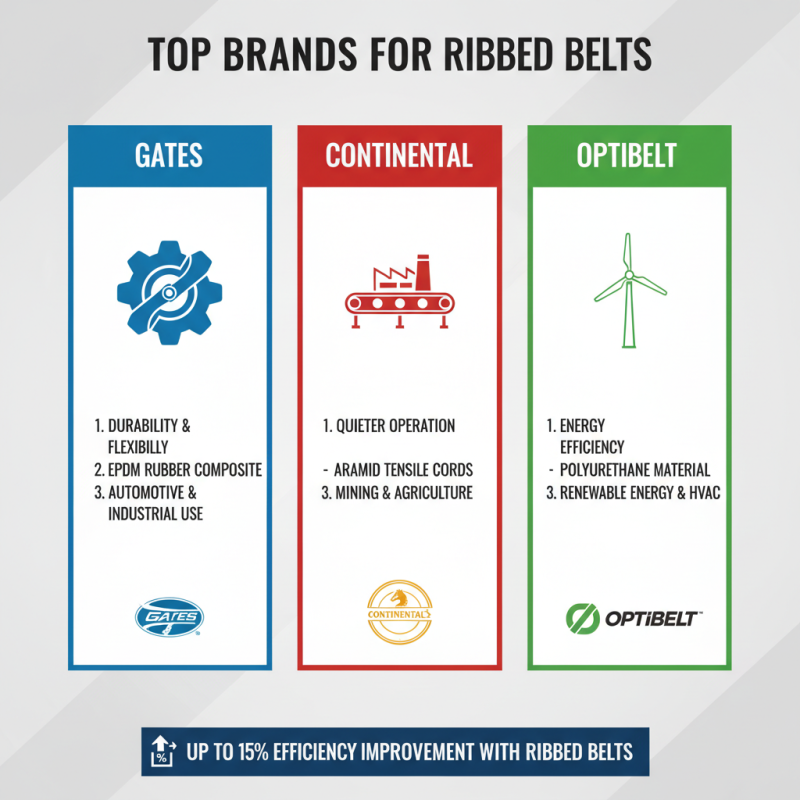
Top Brands for Ribbed Belts and Their Unique Features
Ribbed belts play a crucial role in various machinery applications. They transfer power efficiently while reducing the overall wear on components. Many industries rely on these belts for reliable operation. A report from the International Power Transmission Group estimates that ribbed belts can improve efficiency by up to 15% compared to traditional V-belts.
When exploring top brands, unique features stand out. Some manufacturers focus on innovative materials that enhance durability. For instance, using blended rubber compounds can increase resistance to heat and abrasion. This makes the belts last longer under heavy use. In contrast, others may prioritize flexibility, allowing for easier installation in tight spaces. The right choice often depends on the specific machinery and its operational demands.
Despite available options, selecting the perfect ribbed belt can be challenging. Factors like load capacity and environmental conditions must be considered. Many operators overlook these details, leading to frequent replacements. An analysis by Machinery Maintenance Insights found that poor belt selection can result in a 30% increase in maintenance costs. Therefore, understanding unique features is essential in making an informed decision.
Maintenance Tips for Prolonging the Life of Ribbed Belts
Ribbed belts play a crucial role in machinery.
Proper maintenance is essential for their longevity.
Studies show that regular inspection can extend belt life by up to 30%.
Start by checking for wear and tear regularly. Look for fraying edges or cracks in the ribbed surfaces.
These signs indicate that the belt is nearing its end.
Keeping the belt aligned is also vital. Misalignment can lead to uneven wear.
It’s recommended to adjust the alignment at least once every quarter.
Additionally, proper tension should be maintained. A loose ribbed belt can slip, while one that is too tight may cause
premature wear. Use a tension meter when possible for accurate readings.
Environmental factors can affect the lifespan of these belts.
Dust and debris can accumulate, leading to increased friction.
Regular cleaning may seem tedious, but it’s effective. The right environment can significantly influence performance.
Sometimes, despite following all maintenance steps, belts still fail unexpectedly.
Awareness and adjustments are key to addressing these issues.