Inquiry
Leave Your Message

What Are the 2026 Best Round Belt Pulley Types?

Choosing the 2026 best Round Belt Pulley type requires more than comparing catalog prices. It requires understanding load, speed, belt material, shaft alignment, and working conditions. A small pulley in a compact conveyor may face repeated starts, dust, heat, and uneven tension. Those details change the correct design.

Industry reports provide useful context, although they rarely measure Round Belt Pulley sales separately. Grand View Research’s Industrial Belts Market analysis identifies automation, material handling, and manufacturing upgrades as major demand drivers. MarketsandMarkets also projects continued growth in global conveyor systems, supported by warehouse automation and e-commerce fulfillment. The International Energy Agency reports that electric motor systems consume a substantial share of industrial electricity. Efficient pulley selection can therefore support lower friction and reduced maintenance energy.

W. Edwards Deming, a leading quality expert, said, “Quality comes from the improvement of the production system, not from inspection.” His principle applies here. A pulley should be selected for stable performance, not appearance alone. Grooved pulleys can improve belt tracking. Flanged designs may help in specific alignment conditions. Polyurethane-compatible surfaces can suit clean, high-cycle applications. Steel versions may better tolerate harsh loads.

There is no universal winner.

This article compares the leading Round Belt Pulley types expected to matter in 2026. It considers traction, noise, hygiene, corrosion resistance, installation effort, and service life. The analysis also acknowledges a practical weakness: published market data often combines pulleys with broader belt-drive categories. Buyers should verify supplier testing, dimensional tolerances, and real operating evidence before making a final decision.

What Are the 2026 Best Round Belt Pulley Types?

Definition and Core Function of Round Belt Pulleys

What Are the 2026 Best Round Belt Pulley Types?

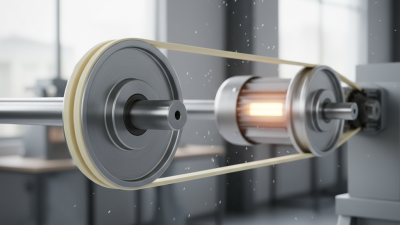
Round belt pulleys are rotating wheels that guide and drive round belts. Their grooved rims support the belt while transferring motion between shafts. Unlike toothed pulleys, they depend mainly on friction and correct belt tension. This design suits light conveying, packaging equipment, small rollers, and low-noise mechanisms.

The best pulley type depends on the working conditions.

Single-groove pulleys fit simple, one-belt systems. Double-groove versions can drive separate belts or improve load distribution. Flanged pulleys help keep belts aligned when shafts face vibration or slight movement. Idler pulleys change belt direction or maintain contact without directly powering the system. Stainless steel or coated metal works well in damp areas, while engineering plastics reduce weight and operating noise.

Fit matters more than appearance.

A pulley should match the belt diameter, groove profile, shaft size, and expected speed. Misalignment can make a belt climb the rim, rub unevenly, or fail early. Keep it practical.

During inspection, check for cracked grooves, rough surfaces, loose hubs, and belt dust near the pulley. A clean, smooth groove is important. However, “best” is not always the largest or strongest option. Excessive tension may overload bearings, while insufficient tension causes slipping. Real installations often reveal small errors that drawings miss, so rechecking alignment after initial operation remains wise.

How Round Belt Pulley Types Differ by Design and Application

What Are the 2026 Best Round Belt Pulley Types?

How Round Belt Pulley Types Differ by Design and Application

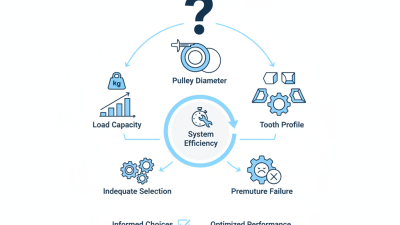
The best round belt pulley depends on belt size, load, speed, and working conditions. A single-groove pulley suits light conveying tasks and compact machinery. Its simple profile reduces installation time and makes cleaning easier. However, it can slip when alignment is poor. Small details matter.

Multi-groove pulleys support several round belts across one shaft. They work well in conveyors, sorting equipment, and transfer systems requiring steadier torque. A flanged pulley helps keep the belt in position during side movement. It is useful where shafts cannot remain perfectly parallel. Yet, excessive flange contact may increase wear. That problem is often overlooked.

Idler and tensioner pulleys manage belt slack without directly driving the load. They are valuable in long conveyor sections and machines with frequent starts and stops. A crowned or guided design may improve tracking, but it cannot correct serious frame misalignment. For humid or washdown areas, corrosion-resistant materials and sealed bearings are practical choices. In dusty workshops, open grooves can collect debris and change belt tension. Engineers should check groove radius, belt diameter, shaft torque, and operating temperature before selection. Manufacturer charts help, but field conditions can disagree with calculations. I have seen a theoretically correct pulley fail after poor alignment and uneven mounting.

Key Materials Used in 2026 Round Belt Pulley Manufacturing

What Are the 2026 Best Round Belt Pulley Types?

Key Materials Used in 2026 Round Belt Pulley Manufacturing

Material selection strongly affects round belt pulley performance, noise, and service life. Polyurethane is widely used for lightweight pulleys because it resists abrasion, moisture, and repeated flexing. It also supports smooth belt tracking in small conveyors and packaging equipment.

Aluminum remains valuable when low weight and fast acceleration matter. Its surface should be anodized or otherwise protected against corrosion. Stainless steel suits humid, washable, or chemically demanding environments, although it increases cost and pulley weight. Acetal and other engineering plastics provide low friction and quiet operation. However, they may deform under high heat or heavy loads. That detail is easy to overlook.

Pulley geometry must match the material. A crowned groove can improve belt centering, while a flanged design may prevent side escape during vibration. In practical testing, the belt tension, shaft alignment, and groove finish often matter as much as the raw material. A strong pulley can still perform poorly when alignment is wrong. That assumption needs checking.

Tips: Choose polyurethane for flexible, quiet systems. Select aluminum for lightweight assemblies. Use stainless steel where cleaning and corrosion resistance are priorities. Check operating temperature, belt hardness, load, and moisture before approving a design. Small test runs are wise. They reveal unexpected wear.

What Are the 2026 Best Round Belt Pulley Types? - Key Materials Used in 2026 Round Belt Pulley Manufacturing

Round Belt Pulley Type Primary Pulley Materials Typical Belt Compatibility Key Material Characteristics Typical Operating Range* Best-Fit Applications Main Selection Advantage
Single-Groove Idler Pulley Acetal (POM), nylon, aluminum, or stainless steel Polyurethane, rubber, and silicone round belts Low rolling resistance; POM and nylon provide low friction, while metal options provide higher rigidity and wear resistance. Approximately -20°C to 80°C for common engineering plastics; wider ranges are possible with metal construction. Conveyors, light-duty transfer systems, packaging equipment, and general material handling Simple construction, easy belt tracking, and broad compatibility
Double-Groove Pulley Anodized aluminum, stainless steel, POM, or reinforced nylon Two parallel round belts, normally polyurethane or rubber Improves load distribution and reduces belt slip; aluminum offers low mass, while stainless steel supports demanding environments. Approximately -20°C to 100°C, depending on the pulley material and belt compound Parallel conveying, synchronized transfer, and moderate-load automation Higher load capacity and better stability than a single-groove design
Flanged Guide Pulley POM, nylon, aluminum, or stainless steel with machined or molded flanges Flexible polyurethane and rubber round belts Side flanges help prevent belt derailment; polymer versions reduce noise and protect delicate conveyed products. Approximately -20°C to 80°C for polymer pulleys; stainless steel is suitable for higher-temperature service. Inclined conveyors, compact handling systems, and applications requiring precise belt positioning Reliable belt retention where alignment or vibration may be an issue
Tapered or Crowned Pulley Machined aluminum, steel, stainless steel, or engineering polymers Polyurethane and rubber round belts used in longer conveyor paths A crowned running surface promotes self-centering; metal construction provides dimensional stability under load. Approximately -20°C to 120°C, depending on material, bearings, and belt selection Long conveyors, transfer lines, and systems with variable belt alignment Improved tracking without requiring complex alignment hardware
Timing-Style Round Belt Pulley Hardened steel, aluminum, stainless steel, or glass-fiber-reinforced nylon Toothed or ribbed round belts designed for positive engagement Form-locked grooves minimize slip; steel offers high wear resistance, while reinforced nylon reduces rotating mass. Approximately -20°C to 100°C for common materials Indexing equipment, synchronized drives, robotics, and precision automation Accurate motion transfer where consistent speed or positioning is important
Food-Contact Hygienic Pulley 316 stainless steel, FDA-compliant POM, or food-contact nylon Food-grade polyurethane or silicone round belts Smooth, corrosion-resistant surfaces support washdown and reduce areas where contaminants can collect. Approximately -20°C to 90°C; verify chemical and sanitation compatibility before use. Food processing, pharmaceutical handling, and clean production environments Cleanability, corrosion resistance, and compatibility with hygienic designs
High-Temperature Pulley Stainless steel, heat-treated steel, aluminum, or high-temperature polymer composites Silicone, specialty polyurethane, or heat-resistant rubber belts Metal construction maintains dimensional stability; silicone belts retain flexibility over a broad temperature range. Approximately 100°C to 200°C, subject to the belt, bearing, lubricant, and pulley design Ovens, thermal processing lines, drying equipment, and hot-material transfer Better resistance to heat-related deformation and premature belt aging
Low-Noise Polymer Pulley POM, UHMW-PE, nylon, or polyurethane-coated aluminum Soft polyurethane, silicone, and low-tension rubber belts Polymer contact surfaces absorb vibration and reduce operating noise; UHMW-PE offers very low friction and good abrasion resistance. Approximately -20°C to 80°C for common polymer combinations Indoor automation, laboratory equipment, electronics handling, and quiet workplace systems Reduced noise, lower surface damage, and lighter rotating components

*Operating ranges are representative engineering values for common material combinations. Actual limits depend on belt compound, pulley diameter, speed, load, bearing design, chemicals, sanitation procedures, and installation conditions.

How to Choose the Best Round Belt Pulley for Each System

What Are the 2026 Best Round Belt Pulley Types?

Choosing the best round belt pulley starts with the system, not the catalog. A single-groove pulley suits simple conveyor runs and moderate loads. A double-flange pulley helps retain the belt during side movement. For long shafts, multi-groove pulleys can drive several belts with better load sharing. Idler pulleys are useful for guiding or tensioning, but they should not create sharp bending angles. Fit matters more.

Match the groove to the belt diameter and material. A groove that is too narrow can pinch a polyurethane belt and increase wear. A deep groove may reduce contact and allow slipping. Check the belt’s recommended tension, operating speed, and minimum pulley diameter. Then inspect the shaft bore, keyway, and available space. Measure under load. Static measurements can mislead.

Material selection depends on the working environment. Aluminum keeps rotating mass low, while steel handles heavier loads and repeated shock. Corrosion-resistant materials suit damp or frequently cleaned equipment. Smooth, accurately machined surfaces reduce abrasion, but excessive polishing is not always helpful. I once selected a pulley by diameter alone. That assumption was wrong. The belt tracked poorly because the flange height ignored lateral movement. Review alignment, tension, temperature, and maintenance access before final selection. A practical trial run may expose problems that calculations miss.

Maintenance, Safety, and Future Trends in Round Belt Pulleys

What Are the 2026 Best Round Belt Pulley Types?

Maintenance, Safety, and Future Trends in Round Belt Pulleys

The best round belt pulley depends on load, speed, belt material, and operating conditions. Grooved pulleys suit steady traction, while crowned pulleys help guide belts during continuous rotation. Flanged pulleys can reduce belt escape, but poor alignment may still create harmful edge wear. Idler pulleys are useful for tension control, especially in compact conveyor systems.

Maintenance begins with a clean inspection. Remove dust, then check grooves for cracks, sharp edges, and uneven polishing. Measure belt tension according to the equipment specification, not by guesswork. Excessive tension can overload bearings. Loose tension can cause slipping and heat. Always isolate power before touching the pulley assembly. Guards should remain secure. A small gap can expose clothing, fingers, or loose tools to moving parts. I have seen maintenance teams replace belts without correcting misalignment. The problem returned within days. That mistake is easy to repeat.

In 2026, pulley design will likely favor lighter materials, low-friction surfaces, and modular parts. Embedded sensors may monitor vibration, temperature, and belt tracking. Recycled polymers could reduce weight and manufacturing waste, although long-term wear data remains limited. Smart monitoring sounds impressive. It still needs calibration. Human inspection will not disappear. Engineers must compare sensor readings with actual groove wear, noise, and operating temperature. Some assumptions may fail in dusty or humid workplaces, so maintenance plans should remain practical, documented, and open to revision.